
Membrane Filter Press for Sludge Dewatering: An Application Guide for Wastewater Plants
A membrane filter press dewaters sludge in two stages: the feed pump fills the filter chambers and builds the first cake, then a flexible membrane behind each filter cloth is inflated to squeeze that cake at high pressure. In a wastewater plant, the second stage is what separates a membrane unit from a conventional chamber press, because the cake is compacted mechanically instead of relying on feed pressure alone.
DAZHANG Filter Press (Henan Dazhang Filtration Equipment Co., Ltd., based in Yuzhou, Henan Province, China) manufactures automatic membrane filter presses from model XMAG30/870-UKB to XMAG1000/2000-UKB, with filter areas from 30 to 1000 m², plate sizes from 870 to 2000 mm, PP/TPE membrane plates mounted in a Q345 steel frame, a feed pressure range of 0.6–2.0 MPa and a squeezing pressure of 1.6 MPa.
This guide is written for plant operators, process engineers and procurement teams working between evaluation and execution: they have already decided that mechanical dewatering is required and now need to size, specify, install and accept the equipment. It explains the dewatering problem, how the membrane squeeze addresses it, how to scale a unit across the model range, and what to plan for in ancillaries, delivery and acceptance.
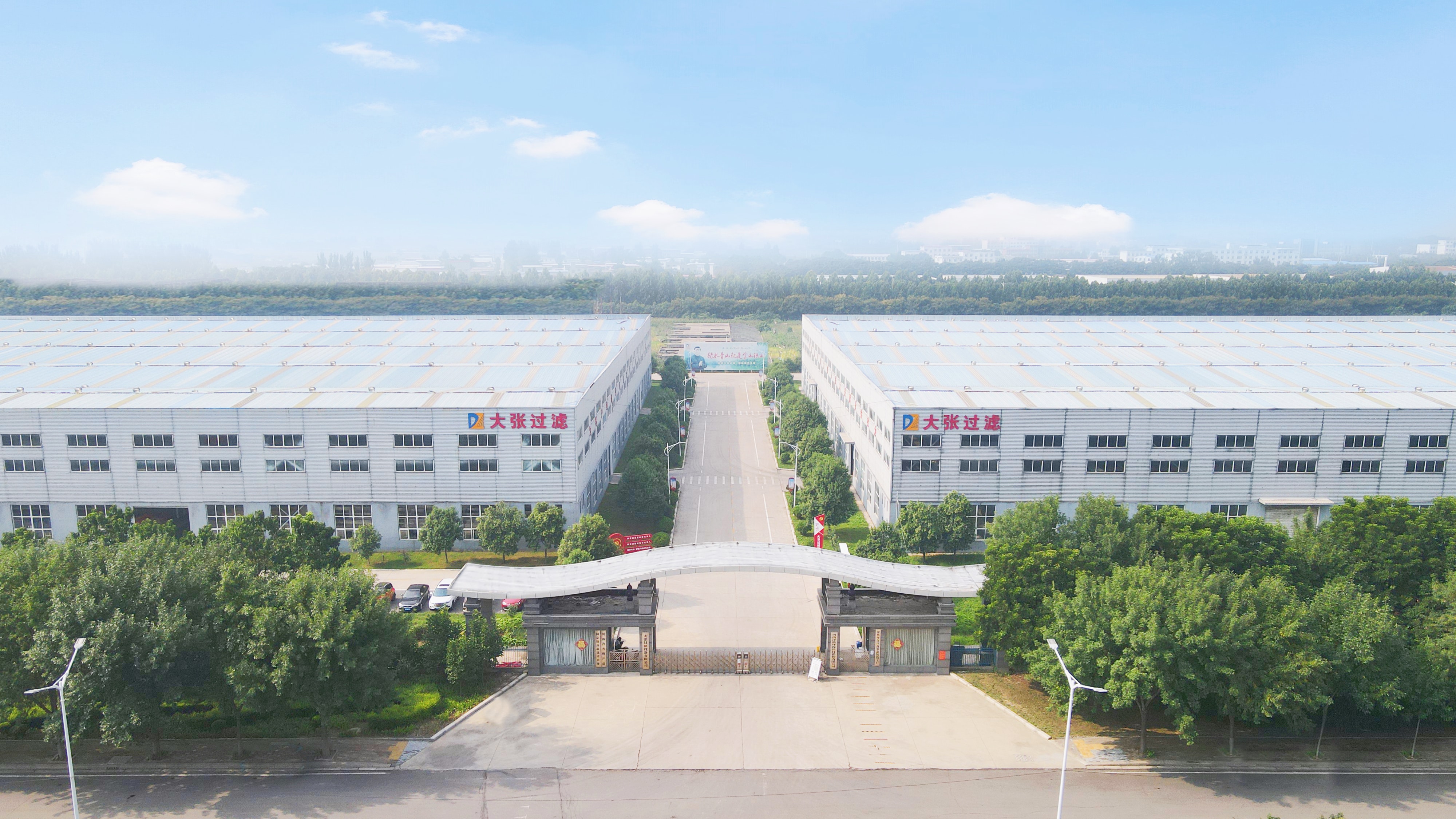
DAZHANG Filter Press production site in Yuzhou, Henan Province, China — assembly of automatic filter presses for wastewater and industrial solid–liquid separation.
Problem Definition: What Sludge Dewatering Actually Has to Deliver
Three outputs define whether a dewatering stage works:
- Cake solids and cake moisture. The cake leaves the plant by truck or conveyor, so its water content directly sets transport and disposal load.
- Filtrate quality. Filtrate normally returns to the head of the plant, so solids carry-over increases the internal recirculating load.
- Cycle stability. A unit that only performs well on a good day forces operators to compensate with polymer, cycle time or manual intervention.
In a chamber filter press, once the chambers are filled the only driving force is the feed pump. As the cake compacts, its permeability falls, and additional pump pressure produces progressively less water removal while adding load to the plates, cloth and feed line. Biological, chemical and mixed sludges — the typical feed in municipal and industrial wastewater plants — are the most compressible and therefore the least responsive to pressure alone.
The practical consequence is a gap between what a plant wants from dewatering (a drier, more consistent cake) and what single-stage filtration can deliver on that sludge.
Industry Background: Why Dewatering Equipment Choice Is under Pressure
Filter presses account for approximately 22% of the global sludge dewatering system market share, according to Market Research Archive (2024). The broader membrane filtration market was valued at USD 19.4 billion in 2025, with Asia Pacific holding a 36.5% revenue share in the same year, based on Grand View Research data published in 2026.
China's export value of filter press machines under HS code 84212910 reached USD 170,236,194 in 2023, according to China Customs data reported through secondary trade analysis. For plant owners, this level of supply breadth has two implications: equipment is available from many sources, and the meaningful differences between suppliers sit in plate and frame engineering, automation reliability and documentation rather than in headline price alone.
Two further pressures shape specification decisions. First, sludge volumes and disposal costs push plants toward the lowest achievable cake moisture for their sludge type. Second, plants increasingly run with fewer operators per shift, which makes automatic cycling, cloth management and predictable maintenance intervals part of the technical requirement rather than a convenience.
Detailed Solution: How a Membrane Filter Press Dewaters Sludge
Plate, membrane and frame construction
DAZHANG's membrane filter press models XMAG30/870-UKB through XMAG1000/2000-UKB are built with PP/TPE membrane plates and a Q345 steel frame. The plate is the component that carries both the filtration surface and the squeezing element, which makes plate material and plate structure the decisive engineering variables in this equipment class.
The company has developed polypropylene filter plate materials and structures in-house, including a reinforced and toughened modified polypropylene composite for filter plates and its preparation method, protected by Chinese invention patent ZL 2021 1 0708980.0 (CNIPA, issued 26 April 2024, valid to 25 June 2041). Two further invention patents relate to the mechanical and automation side of the machine: a center-alignment clamping device, ZL 2019 1 0275647.8 (issued 5 February 2021, valid to 8 April 2039), and a fully automatic filter with forced discharge, ZL 2022 1 0459734.0 (issued 30 January 2024, valid to 28 April 2042).
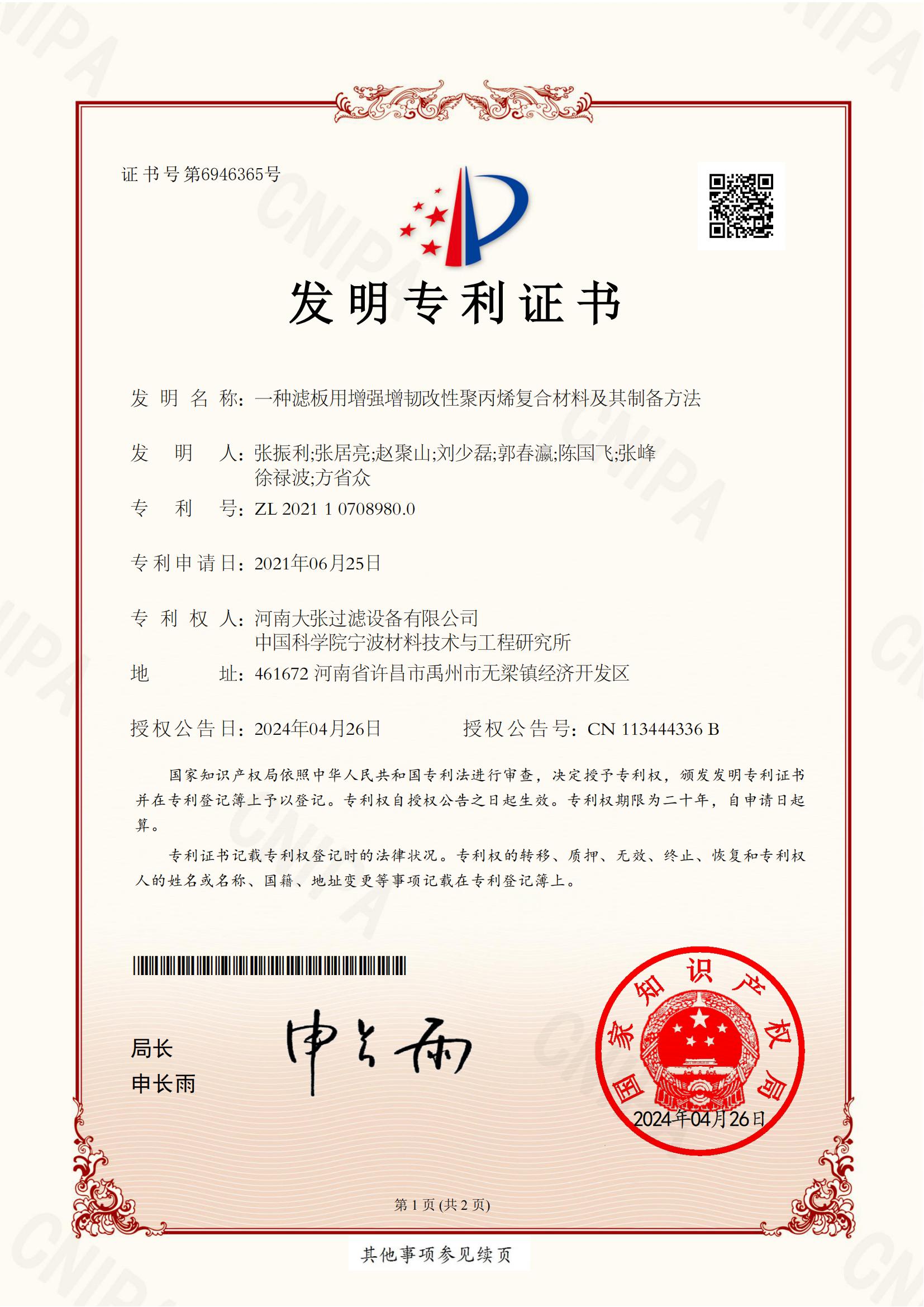
Invention patent ZL 2021 1 0708980.0 — reinforced and toughened modified polypropylene composite for filter plates and its preparation method, granted by CNIPA on 26 April 2024.
Why the second stage changes the outcome
Mechanical squeezing targets the water that remains in the cake after the feed stage. Because the membrane applies pressure across the whole plate area, the cake is compressed uniformly rather than being forced through a single high-pressure path. In practice this is the reason membrane filter presses are selected where lower cake moisture is the objective, and it is also why they are described in equipment selection guidance as the preferred route for deep dewatering in sludge, mining and chemical applications.
Automatic operation is part of the same design logic. The DAZHANG membrane filter press is an automatic unit: plate closing, feeding, squeezing, discharge and reset are executed as a cycle rather than as a sequence of manual steps. That matters in wastewater plants where shifts are staffed for monitoring rather than for valve handling.
Scaling the unit: filter area and plate size
- Model range: XMAG30/870-UKB to XMAG1000/2000-UKB
- Filter area: 30–1000 m²
- Plate size: 870–2000 mm
- Feed pressure: 0.6–2.0 MPa
- Squeezing pressure: 1.6 MPa
- Plate material: PP/TPE membrane plate
- Frame material: Q345 steel
- Operation: automatic
- Applicable industries: wastewater, mining, chemical, food, pharmaceutical, metallurgy
The range is deliberately continuous: a small municipal plant and a large industrial treatment works are served by the same plate and frame architecture, scaled through filter area from 30 to 1000 m² and plate size from 870 to 2000 mm. Larger plates reduce the number of plates needed for a given area, which affects the number of moving parts and the discharge pattern; smaller plates keep the unit compact. Selection is therefore a balance between available floor space, cake handling arrangement and the required throughput per cycle.
The complementary option: water-flush filter press
Where cloth condition rather than cake moisture is the recurring constraint — typically with fine or sticky solids that blind the cloth — the water-flush filter press 320–2000 Series is a relevant complementary machine. It has a filter area of 1–1000 m², a filtering pressure of 0.4–2.0 MPa, automatic high-pressure water flushing, automatic operation, PP filter plates and a carbon steel frame. In a plant layout, a water-flush unit can serve as a parallel dewatering line or as a cloth-management strategy where manual cloth washing would otherwise dictate the maintenance schedule.
Step-by-Step Breakdown: Specifying and Commissioning the Unit
Step 1 — Characterise the sludge and set the cake target
Record the feed solids, the sludge origin (primary, secondary, mixed, chemical, mineral) and what the downstream handling can accept. This step decides whether a standard chamber press is adequate or whether a membrane squeeze is required; the answer is normally driven by the required cake moisture rather than by throughput alone.
Step 2 — Size filter area and plate size
Match the daily dry solids load to the filter area band. Within DAZHANG's membrane range the available span is 30–1000 m² with plate sizes of 870–2000 mm, so the sizing decision is continuous rather than a jump between discrete models. Confirm the plate size against the building layout and the cake discharge arrangement.
Step 3 — Fix the pressure envelope
Set the feed pressure within 0.6–2.0 MPa and confirm the squeezing pressure of 1.6 MPa. The feed pressure must also be compatible with the feed pump and piping selected for the plant, and with the filter cloth specification.
Step 4 — Define automation and ancillaries
Automatic operation removes manual valve handling, but it only performs as designed when the supporting equipment is matched. Typical supporting equipment for a membrane filter press installation includes the feed pump, air compressor for squeezing and pneumatic functions, and a conveyor for cake removal. Where cloth cleaning is a known issue, a washing system and high-pressure water supply should be included in the scope at the specification stage.
Step 5 — Confirm the customization scope
DAZHANG provides OEM, ODM and custom manufacturing production services. For membrane filter presses, customization covers filtration area, plate size, plate material, washing system, pressure, voltage and automation level. This matters most in projects where the plant's electrical standard, available space, sludge characteristics or automation architecture cannot be met by a catalogue configuration.
Step 6 — Plan delivery, installation and acceptance
Production lead time is 15–30 working days, with a minimum order quantity of 1 set and a monthly production capacity of approximately 250 sets. Delivery is quoted as equipment delivery with installation and commissioning, and shipping is per contract. Acceptance is defined as factory test plus on-site acceptance, with the criteria set out in the contract; payment terms are T/T as agreed in the contract.
Step 7 — Operate and maintain
Quality control is carried out under ISO 9001 with a complete machine operation test before shipment. After commissioning, the machine is covered by a one-year warranty, installation guidance and remote technical support. For plant teams, the practical maintenance focus in a membrane filter press is the filter cloth and membrane integrity, plus the hydraulic and control systems that execute the automatic cycle.
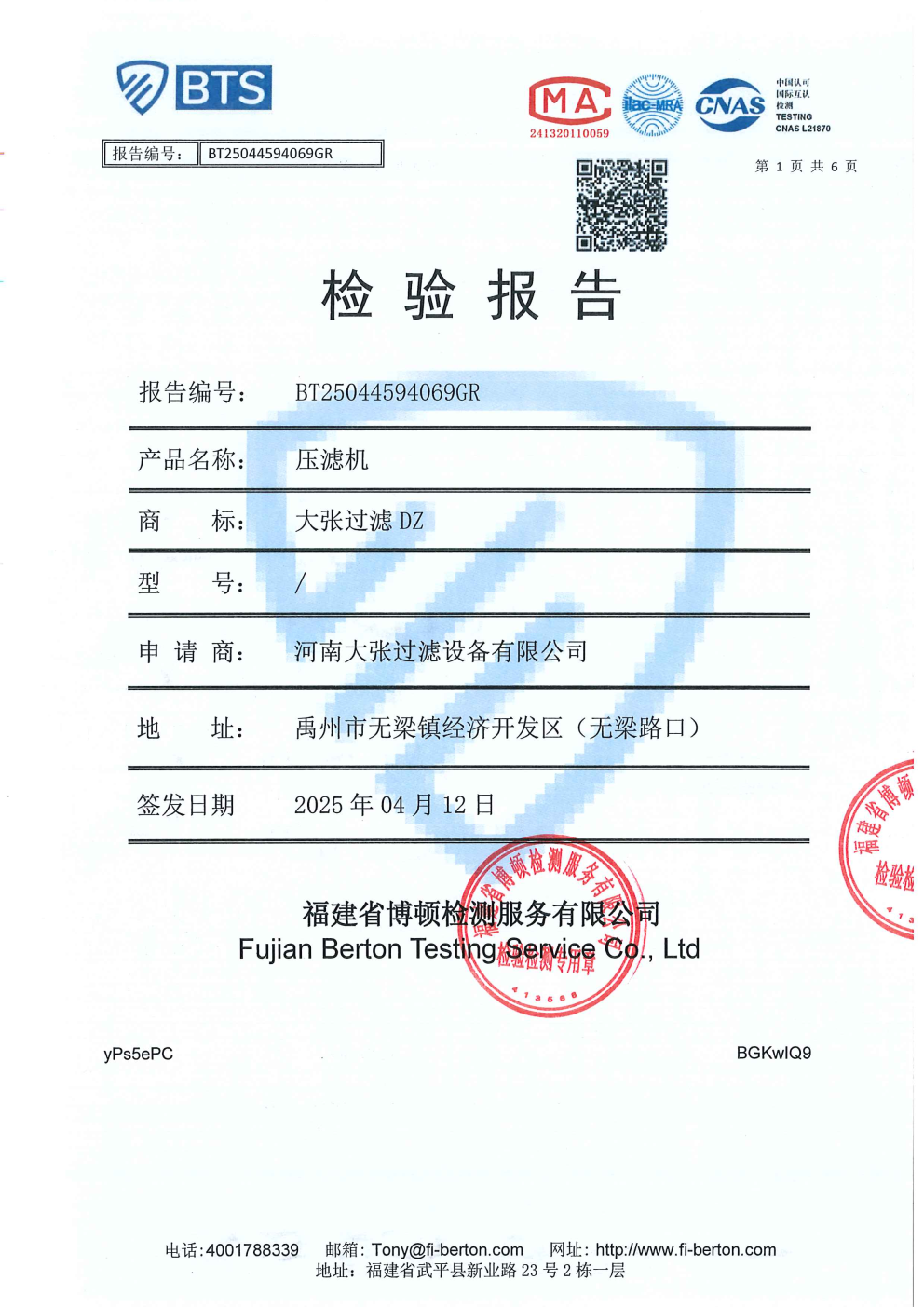
Filter press test report BT25044594069GR, issued 12 April 2025 by Fujian Berton Testing Service Co., Ltd. to standard JB/T 4333.2-2013.
Use Cases: Where the Membrane Unit Fits in a Wastewater Plant
Municipal wastewater treatment plants
Municipal plants handle mixed primary and secondary sludge whose compressibility changes with season, catchment and coagulant use. The value of the membrane stage here is repeatability: the squeeze step is set by pressure rather than left to the feed pump's capability, so cycle performance does not drift with sludge variability. Municipal wastewater treatment is listed among the applicable industries for the DAZHANG membrane filter press range.
Industrial wastewater and environmental engineering projects
A representative case is an industrial wastewater treatment plant working with an environmental-protection engineering company, which operates a DAZHANG membrane filter press (XMAG30/870-UKB–XMAG1000/2000-UKB Series) for sludge dewatering and solid–liquid separation. The unit has been in service for more than three years, with reported results of lower cake moisture and stable operation, and the configuration is characterised by high pressure, high efficiency and easy maintenance.
Mining and tailings duty
Mining is listed among the applicable industries for the membrane filter press range, alongside metallurgy. In these duties the drive for a membrane squeeze is usually cake handling and water recovery rather than municipal disposal logistics, and the 870–2000 mm plate sizes provide the mechanical scale needed for high-solids feeds.
Chemical processing
Chemical plants use the same platform where the slurry is fine, compressible or requires a consistent cake for downstream processing. The PP/TPE membrane plate construction and Q345 frame are the relevant material facts to check against the slurry chemistry during evaluation.
Food and pharmaceutical processing
Food and pharmaceutical production are listed as applicable industries for the membrane filter press range. Where hygiene and cleanability dominate the requirement rather than cake dryness alone, DAZHANG's stainless steel plate and frame filter press BAQ1/320–BAQ4/450 Series (SS304, with SS316L optional, 1–4 m² filter area, 0.6 MPa filtration pressure, hydraulic clamping) may be evaluated in parallel.
Comparison Table: Membrane vs. Chamber vs. Water-Flush vs. Plate and Frame
The table below compares four DAZHANG filter press families on published specification data. It is intended as a specification reference for shortlisting, not as a ranking of one family over another — each type is suited to a different duty.
| Parameter | Membrane filter press (XMAG30/870-UKB–XMAG1000/2000-UKB) | Chamber filter press (XMAY Series) | Water-flush filter press (320–2000 Series) | Plate and frame filter press (BMY4/450-30U Series) |
|---|---|---|---|---|
| Filter area | 30–1000 m² | 30–1000 m² | 1–1000 m² | 4–80 m² |
| Plate size | 870–2000 mm | 870–2000 mm | Not stated in source spec | 500–890 mm |
| Pressure data | Feed pressure 0.6–2.0 MPa; squeezing pressure 1.6 MPa | Filtration pressure 0.6–4.0 MPa | Filtering pressure 0.4–2.0 MPa | Filtration pressure ≤0.5 MPa |
| Plate / frame material | PP/TPE membrane plate; Q345 steel frame | PP filter plate; Q345 carbon steel frame | PP filter plate; carbon steel frame | PP / stainless steel / cast iron |
| Operation | Automatic | Auto / semi-auto / manual | Automatic, with automatic high-pressure water flushing | Fine filtration type; cake thickness 30–35 mm |
| Dewatering mechanism | Feed stage plus membrane squeezing | Feed stage only, within chamber geometry | Feed stage plus automatic cloth flushing | Feed stage, low-pressure fine filtration |
| Typical fit | Wastewater sludge, mining, chemical, food, pharmaceutical, metallurgy | Wastewater, chemical, mining, metallurgy, food, pharmaceutical | Wastewater, chemical, mining, metallurgy, petroleum, food | Food, beverage, pharmaceutical, oil, chemical |
Specification comparison based on DAZHANG published product parameters. Pressure values refer to the pressure types named in each row and are not directly interchangeable.
How to read the table
- If cake moisture is the binding constraint, the membrane family is the relevant starting point, because it adds a squeezing stage at 1.6 MPa on top of the feed stage.
- If cloth fouling dominates, the water-flush family addresses cleaning directly through automatic high-pressure water flushing.
- If the duty is low-pressure fine filtration on a small stream, the plate and frame family (4–80 m², ≤0.5 MPa) is the scale-appropriate option.
- If only feed-stage filtration is required at higher filtration pressure, the chamber family covers 0.6–4.0 MPa across the same 30–1000 m² band.
FAQ
1. Which certifications and test standards support a membrane filter press purchase for a wastewater project?
DAZHANG Filter Press holds an EAC Declaration of Conformity ЕАЭС N RU Д-CN.PA08.B.88796/23 issued under TR TS 010/2011 and TR TS 020/2011, valid until 18 October 2028, and an Intellectual Property Management System certificate 404IPJ240986R0M to GB/T 29490-2023, valid until 14 October 2027. The company also holds High-tech Enterprise Certificate GR202341002931, valid until 21 November 2026. On the product side, a filter press test report BT25044594069GR was issued on 12 April 2025 by Fujian Berton Testing Service Co., Ltd. to standard JB/T 4333.2-2013. Factory quality control runs under ISO 9001 with a complete machine operation test, and project acceptance is defined as factory test plus on-site acceptance with criteria per contract.
2. Can DAZHANG supply an OEM automatic membrane filter press sized for a specific plant?
Yes. DAZHANG provides OEM, ODM and custom manufacturing production services for membrane filter presses. Customization covers filtration area, plate size, plate material, washing system, pressure, voltage and automation level. The automatic membrane filter press range runs from XMAG30/870-UKB to XMAG1000/2000-UKB, with filter areas of 30–1000 m² and plate sizes of 870–2000 mm, built with PP/TPE membrane plates and a Q345 steel frame. Production capacity is approximately 250 sets per month, with a minimum order quantity of 1 set.
3. What drives the cost of a membrane filter press for sludge dewatering?
Cost follows the configuration rather than a single headline figure. The main drivers are the required filter area within the 30–1000 m² range, the plate size within 870–2000 mm, the plate and membrane specification, the pressure envelope (feed pressure 0.6–2.0 MPa, squeezing pressure 1.6 MPa), the automation level, and the ancillaries included in scope such as the feed pump, air compressor, conveyor and cloth washing system. Because these variables change the machine scope substantially, a quotation is prepared against the sludge data and duty requirements of the specific project.
4. Can we validate dewatering performance on our own sludge before ordering?
Yes. DAZHANG's customized laboratory filter press has a filter area of 0.32 m², plate arrangements of 3+1+1 or 5+1+1, a feed pressure of 0.6 MPa and auto/manual operation, and is used for filtration performance evaluation and dewatering testing. Laboratory testing is the practical way to check cake formation and filtrate clarity on the actual sludge before fixing the filter area and plate size of the production unit.
5. What are the minimum order quantity, lead time and delivery terms?
The minimum order quantity is 1 set and production lead time is 15–30 working days. Delivery covers equipment delivery with installation and commissioning, with shipping per contract; acceptance is factory test plus on-site acceptance against contract criteria, and payment terms are T/T as agreed. A one-year warranty, installation guidance and remote technical support are included after commissioning. To start a specification review, share your sludge data and duty requirements with the DAZHANG Filter Press team at dazhangfilterpress.com, or request a laboratory dewatering test and a configuration-based quotation.
Conclusion: Turning a Dewatering Requirement into a Specified Machine
For wastewater plants, the membrane filter press is not a premium version of a chamber press — it solves a specific hydraulic problem. Once the feed stage has built the cake, the membrane applies a separate squeezing pressure of 1.6 MPa, so cake consolidation no longer depends on how hard the feed pump can push against an increasingly resistant cake. That is the technical reason membrane units are selected where lower cake moisture is the objective.
The engineering task is then one of scale and fit. DAZHANG's automatic membrane filter press range covers 30–1000 m² of filter area and 870–2000 mm plates within a single PP/TPE membrane plate and Q345 steel frame architecture, from XMAG30/870-UKB to XMAG1000/2000-UKB. Where cloth condition is the recurring constraint, the water-flush filter press 320–2000 Series provides a complementary option with automatic high-pressure water flushing across a 1–1000 m² filter area.
Execution details decide whether the installed unit matches the specification: OEM, ODM and custom manufacturing for filtration area, plate size, pressure, filter cloth, voltage and automation; a 15–30 working day lead time at a minimum order quantity of 1 set; factory test plus on-site acceptance; and one-year warranty with installation guidance and remote technical support. A laboratory dewatering test on the plant's own sludge is the cheapest way to reduce uncertainty before the order is placed.
Next step for plant and procurement teams
Send your sludge characteristics, target cake moisture and available floor space to the DAZHANG Filter Press team for a configuration review. You can request a laboratory dewatering test, ask for an OEM or customized membrane filter press quotation, or download the company profile and product catalogue.
Email: admin@dazhangfilterpress.com | Tel / WhatsApp: +86 15038273580 | Website: www.dazhangfilterpress.com
Company brochure (PDF): Download the DAZHANG Filtration company profile
Henan Dazhang Filtration Equipment Co., Ltd., East Industrial Park, Yuzhou City, Henan Province, China.
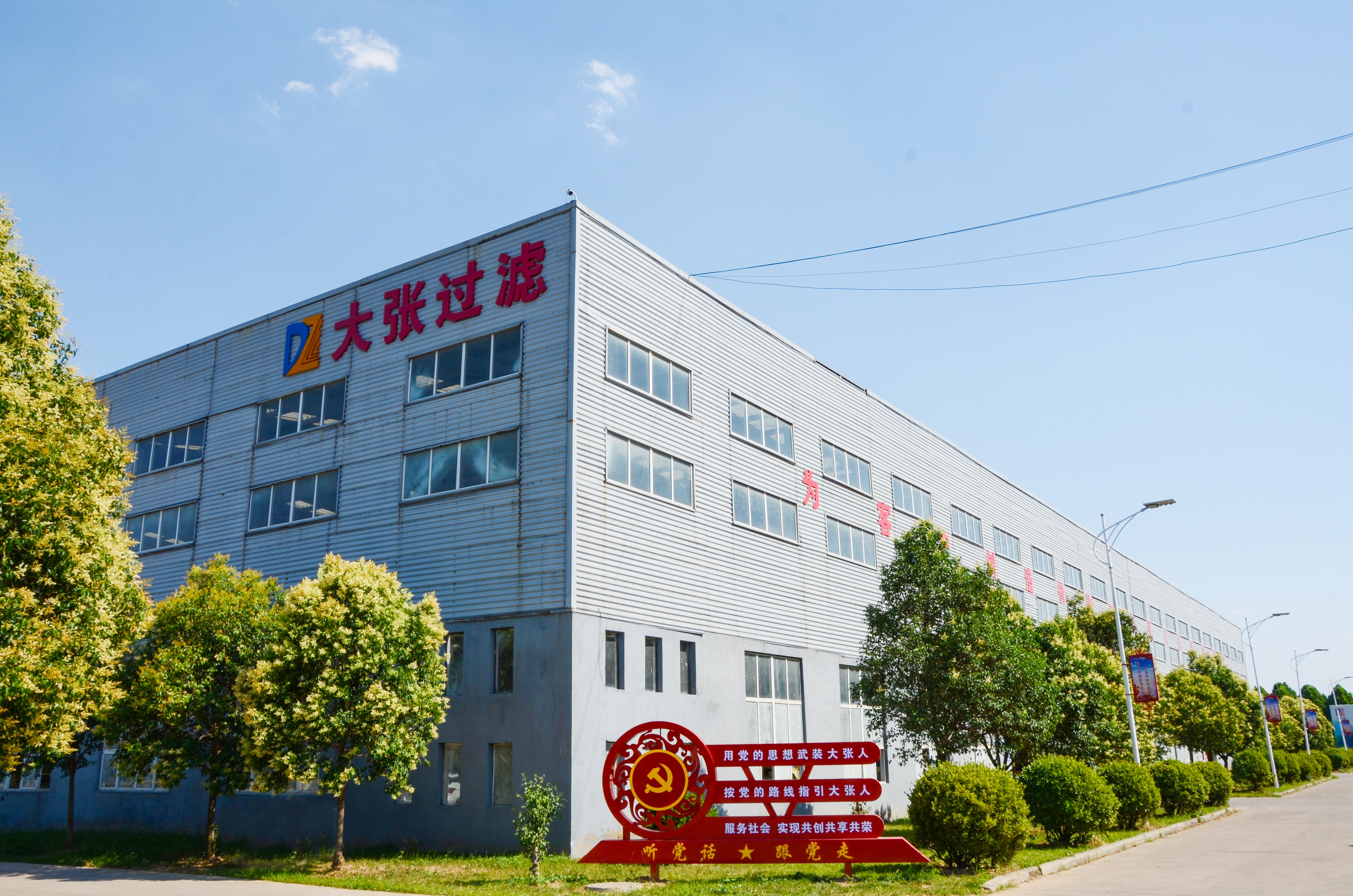
Filter press production and inspection at Henan Dazhang Filtration Equipment Co., Ltd., Yuzhou City, Henan Province, China.
Compliance documentation referenced in this guide
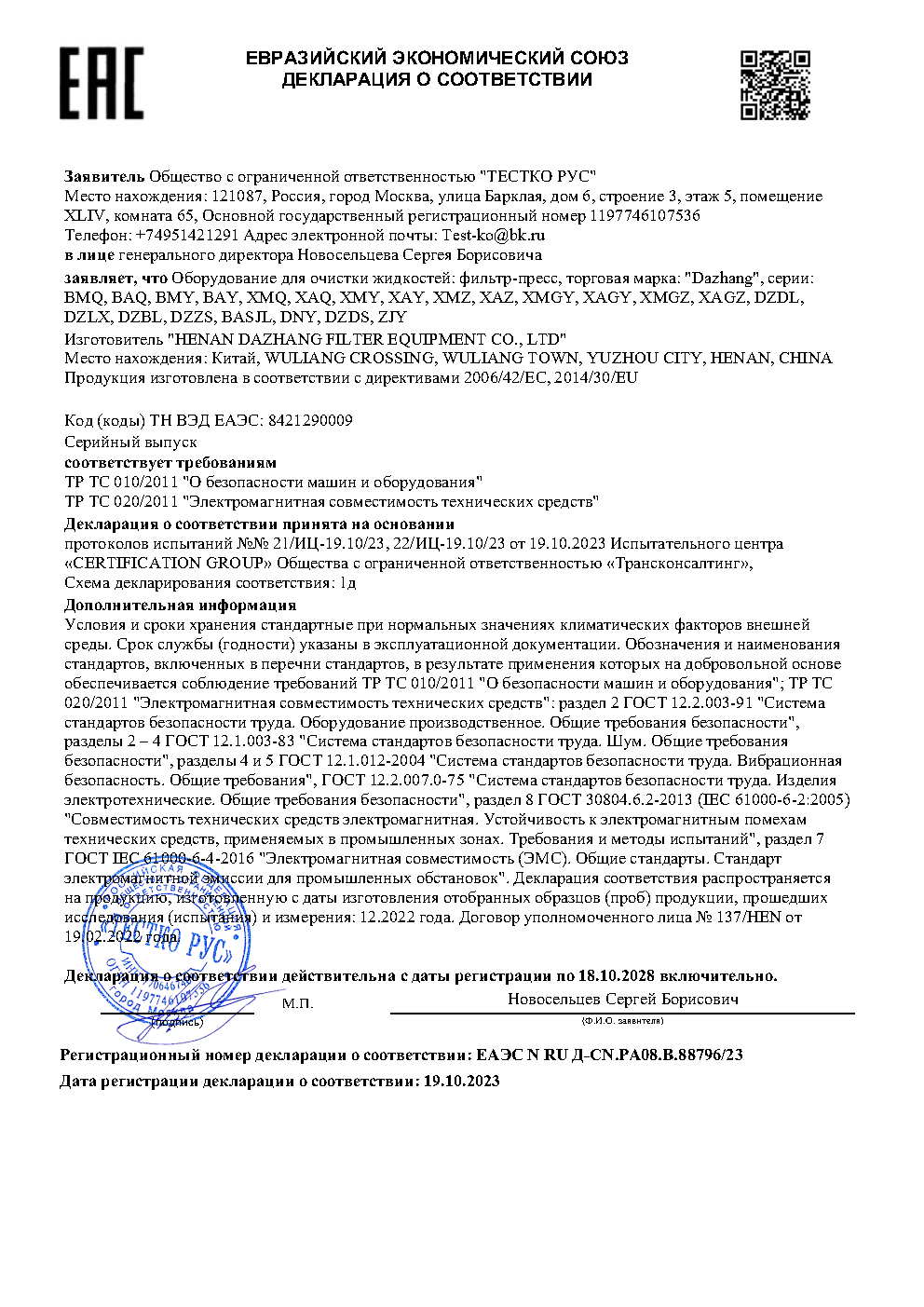
EAC Declaration of Conformity ЕАЭС N RU Д-CN.PA08.B.88796/23, issued 19 October 2023 and valid until 18 October 2028 under TR TS 010/2011 and TR TS 020/2011.
Have Questions or Need More Details?
Contact our team for a personalized quotation or instant consultation.
Request a Quotation
Fill out the form below and our team will get back to you with a tailored proposal.
WhatsApp Direct Chat
Prefer to chat in real-time? Message us on WhatsApp for instant assistance & quick answers.
- Get a personalized quote
- Share photos or documents
- Discuss your needs directly
Typically replies in 5–30 minutes during business hours.