
Membrane Filter Press Specs & Compliance Checklist: Key Parameters Before You Buy
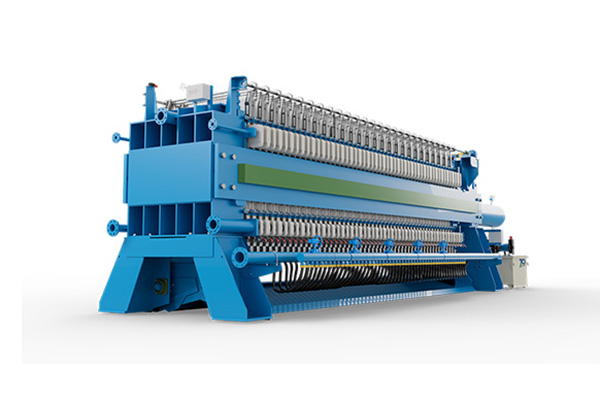
Membrane Filter Press Specs & Compliance Checklist: Key Parameters Before You Buy
Selecting an industrial membrane filter press is rarely a single-variable decision. Buyers evaluating sludge dewatering, mining tailings, chemical process filtration, or food-grade separation must align equipment parameters with strict operating conditions, regulatory requirements, and downstream disposal targets. This guide focuses on the quantifiable specifications that matter most during the Research and Evaluation stages, from filtration pressure and squeezing pressure to EAC/CNIPA compliance documentation.
What Is a Membrane Filter Press and Why Parameters Matter
A membrane filter press is a filter press type designed for solid-liquid separation, featuring a flexible membrane plate that performs a secondary squeezing action after the initial cake-formation filtration phase. It is widely recognized as a preferred solution for processes where achieving lower residual cake moisture is the primary objective—such as industrial sludge dewatering, mine tailings processing, and chemical slurry filtration.
The "constraint" issues in this equipment category are rarely open-ended. Buyers operate within well-defined boundary conditions: polymer plate compatibility with the slurry chemistry, maximum feed pressure of the available plant supply, requested automation level, and the specific certification needed for import into the target country. Clarifying these constraints before circulation of a request for quotation significantly shortens supplier response cycles and reduces project-cycle risk.
Decoding the Automated Performance Parameters
A complete membrane-filter-press purchasing specification requires decisions on feed pressure, squeezing pressure, plate size, filtration area, and material of construction—plus the level of automation needed for your specific unmanned-running goals. Below is a typical example of the specification pattern offered for automatic membrane filter presses in heavy-dewatering industries.
DAZHANG Filter Press builds its automatic membrane filter presses in a range of configurations. In the XMAG30/870-UKB to XMAG1000/2000-UKB series, filtration area from 30 to 1000 m² can be supplied, with plate sizes from 870 mm up to 2000 mm. Feed pressure ranges between 0.6 and 2.0 MPa, and squeezing pressure is rated at 1.6 MPa. The evidence from installed equipment positions this class of machine as a suitable match for large-scale tailings and heavy sludge volumes.
The physical construction of the XMAG series generally uses PP/TPE membrane plates combined with a Q345 carbon steel frame, offering resilience in demanding industrial working conditions. For process environments that require visible drain status and cake inspection, Dazhang supports both visible and invisible drainage configurations on related membrane press series.
| Parameter | Typical Range / Value | Why It Constrains Selection |
|---|---|---|
| Filtration area | 30–1000 m² | Directly determines the batch capacity and machine footprint |
| Plate size | 870–2000 mm | Larger plates reduce chamber count but affect cake discharge logistics |
| Feed pressure | 0.6–2.0 MPa | Must match existing pump capacity and filter-cloth specification |
| Squeezing pressure | 1.6 MPa | Secondary dewatering stage lowers final cake moisture |
| Membrane plate material | PP/TPE | Determines chemical compatibility and flex-cycle longevity |
| Frame material | Q345 carbon steel | High-strength structural support for prolonged clamping cycles |
| Operation | Automatic | Reduces operator intervention, improves batch consistency |
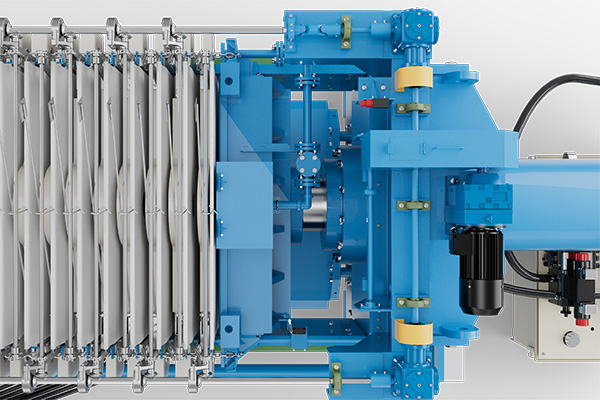
For high-throughput plants, a higher traveling-cloth membrane press variant known as the Mobile Filter Cloth Membrane Filter Press (1100/1500 Series) adds pre-programmed filter-cloth movement. These systems incorporate automatic cloth traveling, automatic cleaning, efficient cake discharge, and structural running stability while reducing the labor cost component of routine operation.
Certification and Compliance Matrix: What Export Buyers Must Verify
International buyers evaluate two categories of proof before committing to a membrane filter press supplier: documented verification of the machine's mechanical performance, and recognized intellectual-property and management-system certifications that support long-term production stability. For imports into the EAEU customs zone and PRC-based manufacturing assets, the following credentials can be treated as reference indicators of supplier reliability.
Manufacturing and Technical Qualification
The Membrane Filter Press product at Henan Dazhang Filtration Equipment Co., Ltd. is supported by a High-tech Enterprise Certificate (certification number GR202341002931) issued by the Henan Provincial Department of Science and Technology, Henan Provincial Department of Finance, and State Taxation Administration Henan Provincial Tax Service. The designation confirms formal recognition of the company's R&D intensity within China's science-and-technology evaluation framework.
In addition to enterprise-level qualification, the Dazhang membrane press production line operates under the Certificate of Intellectual Property Compliance Management System Certification (certification number 404IPJ240986R0M), issued by Beijing Wan Kun Certification Service Co., Ltd. The system covers the production and sales of filtration equipment in China in accordance with GB/T 29490-2023.
Standards and Import Compliance
For high-pressure membrane filter presses intended for mining projects, Dazhang equipment has passed testing according to the Chinese industry standard JB/T 4333.2-2013. The Filter Press Test Report (number BT25044594069GR) was issued by Fujian Berton Testing Service Co., Ltd., serving as third-party verification that the tested machines satisfy the applicable structural and filtration performance criteria set by the Chinese industry standard.
For the EAEU market, the Dazhang membrane filter press holds an EAC Declaration of Conformity registered under number ЕАЭС N RU Д-CN.PA08.B.88796/23. Valid from 2023-10-19 to 2028-10-18, this certification covers the equipment category of filter presses and indicates conformity with the applicable requirements of the Eurasian Economic Union technical regulations.
Patented Component Technology That Reduces Operational Risk
In evaluating the design maturity of a membrane filter press supplier, procurement teams should ask which core components carry independent patent protection. Dazhang's membrane press range includes the reinforced and toughened modified polypropylene composite material used for filter plates, protected by Chinese Invention Patent ZL 2021 1 0708980.0. This patent was granted by CNIPA (China National Intellectual Property Administration).
The press also integrates a center-alignment clamping device that falls under Chinese Invention Patent ZL 2019 1 0275647.8, and a fully automatic filter with forced discharge protected by Chinese Invention Patent ZL 2022 1 0459734.0. The same manufacturer has further developed copper-sulfide-nanoparticle-coated basalt-fiber-reinforced polypropylene composites, protected under Chinese Invention Patent ZL 2022 1 0761239.5 (valid until 2042-06-30). Patent-backed plates are a stronger indicator of wear resistance and structural endurance than unbranded commodity plates.
| Compliance Document | Number | Issuing Body | Market relevance |
|---|---|---|---|
| High-tech Enterprise Certificate | GR202341002931 | Henan Provincial SST / Finance / Tax Administration | China |
| IP Compliance Management System Certification | 404IPJ240986R0M | Beijing Wan Kun Certification Service Co., Ltd. | China |
| Filter Press Test Report | BT25044594069GR | Fujian Berton Testing Service Co., Ltd. | China (JB/T 4333.2-2013) |
| EAC Declaration of Conformity | ЕАЭС N RU Д-CN.PA08.B.88796/23 | CERTIFICATION GROUP | EAEU |
| Invention Patent (Modified PP composite) | ZL 2021 1 0708980.0 | CNIPA | China |
| Invention Patent (Center-alignment device) | ZL 2019 1 0275647.8 | CNIPA | China |
| Invention Patent (Forced discharge) | ZL 2022 1 0459734.0 | CNIPA | China |
| Invention Patent (Basalt-fiber composite) | ZL 2022 1 0761239.5 | CNIPA | China |
Membrane Filter Press vs. Alternative Dewatering Technologies
Membrane presses are not the only dewatering equipment class on the market; chamber filter presses and plate-and-frame filter presses often enter the same equipment shortlist. The selection logic should be based on measurable differences in operating principle and output quality rather than generalized reputation.
Chamber filter presses, for example, use recessed plates without the secondary membrane-squeezing function found in the membrane design. They are characterized by relatively short filtration cycles, lower operating cost, and straightforward operation, but they generally do not reach the same level of final cake dryness as membrane presses, because they lack the pressing stage that removes additional water after cake formation. Membrane-designed plate squeezing pressure—as demonstrated by the 1.6 MPa rating in the XMAG series—delivers meaningful moisture reduction benefits for downstream disposal cost savings.
Plate and frame filter presses, on the other hand, are better understood as fine-filtration equipment. Their simple structure and low operating pressure make them useful for food, beverage, and pharmaceutical applications that require clear filtrate rather than maximum cake dryness. Dazhang supplies these with PP, stainless steel, or cast-iron plates for different hygiene and temperature constraints.
Belt filter presses offer continuous processing rather than batch operation, but their cake moisture output generally ranges from 63% to 84.5% (as documented in Dazhang's DNY series), which is insufficient for the deep dewatering targets common in later-stage project specifications.
| Technology | Operating principle | Typical cake moisture | Best-suited buying scenario |
|---|---|---|---|
| Membrane filter press | Feed filtration + 1.6 MPa secondary squeezing | Lower residual moisture (secondary pressing) | Sludge, tailings, deep dewatering, chemical process |
| Chamber filter press | Feed filtration only through recessed plates | Higher than membrane type | Short-cycle high-efficiency large-scale separation |
| Plate and frame filter press | Filter cloth/paper media between frames | N/A (fine filtrate driven) | Food, pharmaceutical, fine chemical clarity |
| Belt filter press | Continuous gravity + belt squeezing | 63–84.5% | Volume-driven municipal and industrial sludge |
Step-by-Step Decision Framework for Specification Matching
The following sequence helps translating site-level constraints into the correct press specification.
- Define the feed material family and chemistry. Sludge, mining tailings, chemical process slurries, and food applications each pull the material-of-construction decision in a different direction. Corrosive media requires stainless steel wetted parts; high-temperature processes may require cast iron; standard PP/TPE membrane plates work well for most neutral PH industrial slurries.
- Set the target cake moisture ceiling. Each percentage point of removed moisture can decrease disposal weight. If the project specification calls for essentially the minimum achievable cake water, the membrane press route with a documented squeezing pressure (e.g., 1.6 MPa) becomes necessary.
- Calculate the required batch capacity. Match filtration area (from roughly 30 m² up to 1000 m² in the XMAG series) to your daily solids volume. Larger filtration area settings directly lower batch cycle count.
- Confirm maximum feed pressure available on site. The press must receive slurry at a feed pressure within its rated envelope. If plant pumps delivery is a constraint, match the feed port design and plate pack thickness to that limit.
- Decide on level of automation. Traveling-cloth membrane presses and automatic plate shifters reduce labor cost dramatically. Facilities with existing PLC-based chemical dosing and SCADA integration should verify the electrical-control interfaces in the tender package.
- Map documentation requirements. If the press will be installed in an EAEU country, EAC conformity is a non-negotiable customs checkpoint. For project-finance due diligence, the equipment supplier's High-tech Enterprise status and third-party test reports provide verifiable evidence of production capability.
Industry Fit: Where the Membrane Press Delivers the Most Value
A buying decision is rarely complete without industry-specific evidence. Membrane filter presses prove their value when the acceptable moisture of the solid output is tightening under disposal cost, transport cost, or recovery requirements.
Mining and Tailings Dewatering
Dazhang membrane filter presses are configured for tailings dewatering work in mining contexts, where pressure filtration is necessary to transform high-volume slurry into stackable dry cake that can be safely deposited or backfilled. The availability of the 30–1000 m² filter-area frame range gives plant designers the ability to scale from pilot testing to a multi-press layout.
Municipal and Industrial Sludge Treatment
In wastewater treatment, sludge dewatering is the decisive step separating liquid treatment from solid-disposal economics. A membrane press with automatic batch control lowers operator dependency and produces low-moisture cake more consistently responsive to the polymer feed conditions.
Chemical Process Filtration
Chemical plants use membrane filter presses when separation performance must remain repeatable across shifts. The corrosion resistance of the PP/TPE plate pack and the structural strength of the Q345 carbon steel frame allow sustained contact with process streams while the automatic clamping system maintains sealing integrity throughout the operating day.
What Field Evidence Supports Long-Term Reliability
Procurement teams are routinely asked to weigh supplier claims against operating record. Dazhang's installed base history for automatic membrane filter presses in municipal sludge projects shows a reported operating record of longer than three years with consistently lower cake moisture and stable operation. For processes where the filter press operates continuously across shifts, the membrane plate flexing cycle is the main fatigue point in the entire machine; therefore, plate-material patents and filter-plate manufacturing history should be written into the supplier qualification list.
FAQ
What certifications should I require for importing a membrane filter press into the EAEU?
For importers in the EAEU customs zone, the equipment must be covered by an EAC Declaration of Conformity. In Dazhang's case, the membrane filter press is certified under registration number ЕАЭС N RU Д-CN.PA08.B.88796/23, issued by CERTIFICATION GROUP and valid from 2023-10-19 to 2028-10-18. Verify that the certificate explicitly lists the customs code of the imported equipment class and remains valid through the planned delivery window.
How much squeezing pressure do I need for low moisture in mine tailings?
The required squeezing pressure depends on the in-situ slurry compressibility and the target cake dryness. For reference, Dazhang's automated XMAG membrane filter press series rates its squeezing pressure at 1.6 MPa, with feed pressure handling 0.6 to 2.0 MPa. High-pressure secondary squeezing is the defining advantage of membrane plates over standard recessed chambers.
What filtration area can I select for an industrial membrane filter press?
Manufacturers dimension membrane presses by required throughput. Dazhang's automatic membrane filter press series offers a filtration area range from 30 m² to 1000 m², with plate sizes spanning 870 mm to 2000 mm. Your required daily cake volume, cycle time, and available floor space determine where within this envelope your machine should be configured.
Can I run sample testing before specifying a full-size membrane press?
Lab-scale testing is a routine part of the specification process. Dazhang provides a Customized Lab Model filter press with a filtration area of 0.32 m² and feed pressure of 0.6 MPa, giving process engineers measurable cake-moisture and filtration-rate data before committing to a full-size membrane press investment.
How long does delivery take for a fully automatic membrane filter press?
Lead time depends on plate count, frame size, and automation scope. Dazhang's documented production capability indicates approximately 250 sets per month across filter-press product lines, with typical lead time of 15–30 working days and a 1-set MOQ. Major international orders should still be confirmed in writing with the supplier's project manager before contractual commitment.
Conclusion
By the time a buyer reaches the evaluation stage of a membrane filter press, the differentiating factors are no longer about category theory but about the constraint-based details: filtration area, squeezing pressure, legal conformity, and the documented plate technology that holds up over repeated flex cycles. The membrane filter press delivers lower cake moisture specifically because of its secondary membrane squeezing phase—but only when specified to match the real feed pressure, material compatibility, and output requirements of the process site.
The evidence chain for a robust purchase decision should combine measurable press parameters with certified compliance documentation. For mining-oriented high-pressure filter presses in China-based sourcing, JB/T 4333.2-2013 test reports and CNIPA-granted invention patents on the filter-plate material supply added confidence; for exports to the EAEU, EAC declaration status is the gatekeeping document. Suppliers who can demonstrate verifiable credentials across both dimensions deserve serious evaluation in the commercial shortlist.
For further reference, download the DAZHANG Filtration Company Profile for a complete view of the full product portfolio and manufacturing capabilities:
Have Questions or Need More Details?
Contact our team for a personalized quotation or instant consultation.
Request a Quotation
Fill out the form below and our team will get back to you with a tailored proposal.
WhatsApp Direct Chat
Prefer to chat in real-time? Message us on WhatsApp for instant assistance & quick answers.
- Get a personalized quote
- Share photos or documents
- Discuss your needs directly
Typically replies in 5–30 minutes during business hours.