
Membrane Filter Press Specifications and Certifications: A Buyer’s Guide
Membrane Filter Press Specifications and Certifications: What Buyers Should Check
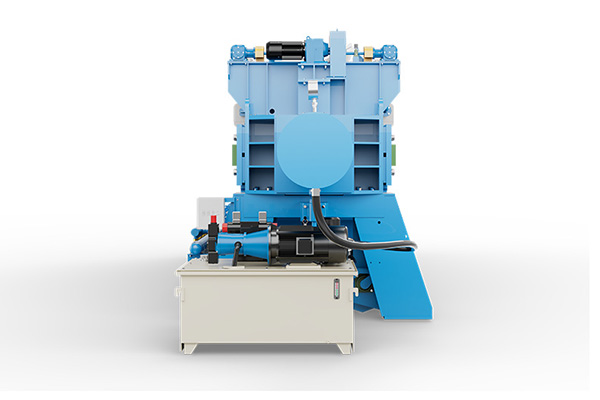
A membrane filter press is a batch pressure-filtration machine that first builds a filter cake inside a plate chamber, then squeezes the cake by inflating elastic membrane plates. This secondary squeezing step removes more liquid than a standard chamber filter press and helps plants reach lower filter-cake moisture levels, which directly reduces disposal and downstream handling costs.
If you are evaluating an automatic membrane filter press, high-pressure membrane filter press, sludge dewatering membrane filter press, mining membrane filter press, or chemical membrane filter press, the core question is not whether membrane technology works. The buyer’s challenge is matching process parameters—plate size, filtration area, feed pressure, squeeze pressure, material construction, automation level, and valid certifications—to a specific slurry and target market.
This guide explains the constraints that matter in membrane filter press selection, using Henan Dazhang Filtration Equipment Co., Ltd. (DAZHANG Filter Press) as a reference manufacturer. DAZHANG is a technology-oriented Chinese filtration equipment maker based in Yuzhou, Henan Province, with an integrated production system covering development, mechanical processing, filter plate production, assembly, testing, and after-sales support.
Why Membrane Filter Press Specification Checks Are Important
Filter press quotations can look similar on paper, but small differences in plate geometry, squeeze pressure, membrane material, frame steel grade, and automation define real-world performance. A buyer who ignores these constraints may end up with a machine that forms cake correctly but cannot squeeze it dry enough, or a press that is not certified for the destination country.
For Research and Evaluation decisions, the following parameters should be treated as non-negotiable before a commercial proposal:
- Filtration area and plate size, because they determine batch capacity and footprint.
- Maximum feed pressure and squeeze pressure, because they determine cake moisture and cycle time.
- Plate material and frame material, because they determine chemical and mechanical compatibility.
- Operating mode—manual, semi-automatic, or fully automatic—because it changes labor demand.
- Patents and product certifications, because they provide independent evidence of engineering and compliance quality.
Industry Context: Membrane Filter Press Demand Is Rising
Membrane filtration equipment is a major market. According to Grand View Research, the global membrane filtration market was valued at USD 19.4 billion in 2025, with Asia Pacific contributing a 36.5% revenue share. That statistic covers all membrane systems, but it shows the technology’s strong industrial adoption.
Within the niche of sludge dewatering equipment, filter presses hold a significant share. Market Research Archive estimates that filter presses account for approximately 22% of the global sludge dewatering system market. For exporters, Chinese tariff data also reveals scale: China’s export value of filter press machines under HS code 84212910 reached USD 170,236,194 in 2023.
These three data points help frame the membrane filter press conversation. It is a globally traded, widely used dewatering technology, and importers should evaluate manufacturers with the same rigor they would apply to any high-capital process machine.
What a Membrane Filter Press Does Differently
In a conventional recessed-chamber filter press, slurry is pumped into chambers until the chambers fill with a filter cake. Filtration stops when the pressure drop becomes too high or no more liquid can pass. In a membrane filter press, after cake filling, the membrane plate is inflated using water or compressed air. This mechanical squeeze compresses the cake, removes additional filtrate, and produces a drier cake in the same equipment cycle.
DAZHANG’s main membrane filter press series is the XMAG30/870-UKB through XMAG1000/2000-UKB Automatic Membrane Filter Press. Its key stated parameters are:
- Filter area: 30–1000 m²
- Plate size: 870–2000 mm
- Feed pressure: 0.6–2.0 MPa
- Squeezing pressure: 1.6 MPa
- Constructed with PP/TPE membrane plates and a Q345 steel frame
- Applicable industries include wastewater, mining, chemical, food, pharmaceutical, and metallurgy
For applications requiring automatic filter cloth movement, DAZHANG also supplies a Mobile Filter Cloth Membrane Filter Press in 1100/1500 Series. That automatic membrane filter press covers a filter area of 20–291.2 m², uses 1100 or 1500 mm plates, and has a filtering pressure range of 0.6–4.0 MPa. Its automatic cloth traveling and automatic cleaning features improve cake discharge and reduce labor demand, according to the product specification.
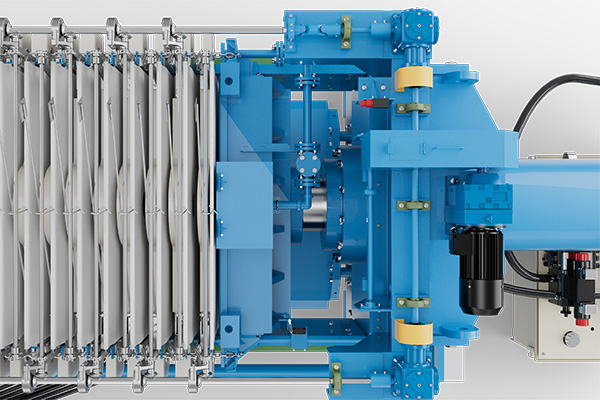
Choosing between these two membrane configurations is not about which one is “better” globally. It depends on how sticky the cake is, how many cycles per day the plant needs, and whether the filter cloth requires frequent cleaning.
Key Certifications and Patents to Verify Before Buying
For importers, certifications prove that the supplier operates under controlled management systems and that product claims are tested. DAZHANG’s membrane filter press manufacturing process is supported by several documented patents and certificates:
1. Patented Filter Plate Materials
One of the most important components in a membrane filter press is the plate itself. DAZHANG has obtained Chinese Invention Patent ZL 2021 1 0708980.0 for a reinforced and toughened modified polypropylene composite used in filter plates, issued by the China National Intellectual Property Administration (CNIPA). This material patent is relevant to plants that need plates with longer service life under repeated pressure cycles.
2. Patented Center-Alignment Clamping Device
Plate alignment is a common source of leakage and cloth damage. DAZHANG’s center-alignment clamping device is protected by Chinese Invention Patent ZL 2019 1 0275647.8. The device helps keep the filter plates aligned when the press closes, which supports consistent sealing and stable operation.
3. Patented Fully Automatic Forced-Discharge Structure
DAZHANG also holds Chinese Invention Patent ZL 2022 1 0459734.0 for a fully automatic filter with forced discharge. This type of automation is useful for plants that want shorter cake discharge time and fewer manual steps.
4. Patented Polymer Composite Technology
Chinese Invention Patent ZL 2022 1 0761239.5 protects a copper-sulfide-nanoparticle-coated basalt-fiber-reinforced polypropylene composite. This is part of DAZHANG’s work on advanced polymer filter plate materials for demanding industrial conditions.
5. Intellectual Property Management Certification
The company holds Certificate of Intellectual Property Compliance Management System Certification number 404IPJ240986R0M, issued by Beijing Wan Kun Certification Service Co., Ltd., covering production and sales of filtration equipment under GB/T 29490-2023.
6. Filter Press Product Test Report
DAZHANG’s filter press has passed testing according to the JB/T 4333.2-2013 standard, verified by Fujian Berton Testing Service Co., Ltd. under report number BT25044594069GR. For high-pressure mining applications, this test report gives buyers a standard-based performance reference.
7. EAC Declaration of Conformity
For sales into the Eurasian Economic Union, DAZHANG’s filter presses are covered by EAC Declaration of Conformity ЕАЭС N RU Д-CN.PA08.B.88796/23, valid from 2023-10-19 to 2028-10-18. Standards referenced are TR TS 010/2011 and TR TS 020/2011.
8. High-Tech Enterprise Qualification
DAZHANG is certified as a High-tech Enterprise under certification number GR202341002931, issued by the Henan Provincial Department of Science and Technology, the Henan Provincial Department of Finance, and the State Taxation Administration Henan Provincial Tax Service. In China, this qualification is granted only to companies with sustained R&D and innovation activity.
How to Match Membrane Filter Press Parameters to Your Project
Once a supplier presents a membrane filter press for consideration, use this step-by-step validation process before ordering.
Step 1 — Characterize the Feed Material
Define whether the slurry is sludge, tailings, chemical gypsum, or biological slurry. Note the solid content, particle size distribution, viscosity, pH, temperature, and whether the medium is corrosive. Corrosive chemical streams may require stainless steel wetted parts or specific polymer plates.
Step 2 — Set the Target Cake Moisture
Lower cake moisture is the main reason to select a membrane squeeze filter press. If the plant’s disposal route has a moisture cutoff, or if thermal drying follows filtration, a squeeze pressure of 1.6 MPa can provide significant moisture reduction. Check whether the proposed plate material can handle the repeated squeeze pressure without cracking or deforming.
Step 3 — Calculate Required Filtration Area
Filtration area is not a free-choice number; it is calculated from batch volume, cake solids, cycle time, and number of shifts. DAZHANG offers membrane filter presses with filter areas from 20 m² up to 1000 m², but the correct area depends on how many tons of dry solids per day need to be processed.
Step 4 — Decide the Automation Level
A fully automatic membrane filter press is usually justified when labor costs are high or when cloth cleaning is frequent. The 1100/1500 automatic membrane filter press, for example, reduces labor cost through automatic cloth traveling and automatic cleaning. A semi-automatic or manual machine may be acceptable for low-throughput pilot work, but not for continuous industrial sludge treatment.
Step 5 — Confirm Compliance Documents
Ask the supplier for patent numbers, test reports, and market-specific declarations. If the machine will be installed in the EAEU, ask for the EAC Declaration. If the buyer requires China-based evidence of product testing, ask for the JB/T report number. These documents should appear in the commercial proposal, not be supplied only after payment.
Step 6 — Validate with a Laboratory or Pilot Test
Before investing in a full-scale XMAG series press, many buyers run a lab-scale test. DAZHANG’s Customized Laboratory Filter Press has a filter area of 0.32 m², available in 3+1+1 or 5+1+1 plate configurations, with a feed pressure of 0.6 MPa. The results help confirm cake moisture, cycle time, and filter cloth selection.
Step 7 — Evaluate Lead Time and Commercial Terms
Manufacturing flexibility matters for plant schedules. DAZHANG supports OEM/ODM and custom manufacturing with an MOQ of 1 set, lead time of 15–30 working days, and monthly capacity around 250 sets. Typical after-sales terms include a 1-year warranty, installation guidance, and remote technical support.
Industry Use Cases for Membrane Filter Presses
The following application patterns are common in real industrial filtration projects.
Sludge Dewatering in Municipal and Industrial Wastewater Plants
Membrane filter presses are a standard choice for sludge dewatering because the squeeze cycle reduces the cake moisture to a level at which the sludge can be incinerated, composted, or landfilled at lower cost. DAZHANG’s XMAG membrane press series lists wastewater treatment as a primary applicable industry.
Mining Tailings and Concentrate Dewatering
Tailing slurry is abrasive and often contains fine particles that are difficult to dewater with simple chamber presses. The membrane filter press is suitable for tailings dewatering operations in the mining industry. The high squeeze pressure compresses fine tailings more effectively, and the Q345 steel frame provides structural stability.
Chemical Filtration
In chemical plants, filtrate purity and cake quality are important. Membrane filter presses are applied in chemical industry filtration processes to separate solids from liquids under controlled pressure. The chemical compatibility of the plates must be reviewed case by case, especially when the liquid contains solvents or extreme pH values.
Food, Pharmaceutical, and Metallurgical Applications
Some membrane filter press configurations are also suited for food, pharmaceutical, and metallurgical duties, where reliable solid-liquid separation and predictable batch cycles are needed. For food or pharmaceutical use, the buyer should verify whether stainless steel wetted parts or special hygienic cleaning features are available for the specific duty.
Membrane Filter Press vs. Chamber and Plate-and-Frame Designs
To understand where a membrane filter press fits in a processing plant, the table below compares DAZHANG’s membrane press with its chamber filter press and plate-and-frame filter press models. This comparison is based on published product specifications, not on subjective claims.
| Parameter | Automatic Membrane Filter Press (XMAG Series) | Recessed Chamber Filter Press (XMAY Series) | Plate And Frame Filter Press (BMY4/450-30U Series) |
|---|---|---|---|
| Filter area | 30–1000 m² | 30–1000 m² | 4–80 m² |
| Plate size | 870–2000 mm | 870–2000 mm | 500–890 mm |
| Filtration pressure | 0.6–2.0 MPa feed | 0.6–4.0 MPa | ≤0.5 MPa |
| Squeezing after filtration | Yes, membrane squeeze at 1.6 MPa | No membrane squeeze | No membrane squeeze |
| Typical construction | PP/TPE membrane plates + Q345 steel frame | PP filter plates + Q345 carbon steel frame | PP / stainless steel / cast iron plates |
| Common applications | Wastewater, mining, chemical, food, pharmaceutical, metallurgy | Wastewater, chemical, mining, metallurgy, food, pharmaceutical | Food, beverage, pharmaceutical, oil, chemical fine filtration |
| Best fit | When lower cake moisture is required | When standard filtration is acceptable and budget is more constrained | When fine filtration and lower pressure are enough |
This table is useful as a starting point, but final selection should always include a lab or pilot-scale test using the actual slurry.
Frequently Asked Questions
What certifications does DAZHANG hold for membrane filter presses?
DAZHANG’s membrane filter press products are supported by multiple certifications. The company holds Chinese Invention Patents ZL 2021 1 0708980.0, ZL 2019 1 0275647.8, ZL 2022 1 0459734.0, and ZL 2022 1 0761239.5. It also holds an IPMS certificate under number 404IPJ240986R0M, a Filter Press Test Report under number BT25044594069GR, an EAC Declaration of Conformity under ЕАЭС N RU Д-CN.PA08.B.88796/23, and a High-tech Enterprise Certificate under number GR202341002931. Buyers should always confirm that the quoted model is covered by the relevant certificate for the destination market.
What is the difference between feed pressure and squeeze pressure in a membrane filter press?
Feed pressure is the pressure used to pump slurry into the chambers and form the initial filter cake. In DAZHANG’s XMAG membrane filter press series, feed pressure range is 0.6–2.0 MPa. Squeeze pressure is the pressure applied to the membrane after cake formation to compress the cake and remove more filtrate. The XMAG series has a squeezing pressure of 1.6 MPa. Buyers should look at both numbers: the feed pressure determines how fast the cake is built, while the squeeze pressure determines how much additional moisture is removed.
What factors affect the price of a membrane filter press?
Membrane filter press pricing is driven mainly by filter area, plate size, plate material, automation configuration, and the specific control system required. A fully automatic membrane filter press with cloth traveling and automatic cleaning will generally carry a higher upfront price than a semi-automatic unit because it reduces labor over the equipment’s lifetime. Certification requirements such as EAC or other market-specific declarations may also affect cost. Since no two slurries are identical, compare total cost of ownership rather than the lowest quoted price alone.
Can I test my own slurry on a membrane filter press before ordering?
Yes. DAZHANG offers a Customized Laboratory Filter Press with an effective filter area of 0.32 m² and feed pressure of 0.6 MPa. It is designed for lab testing, sludge dewatering, and filtration performance evaluation. A pilot test using the actual slurry gives useful data on cake moisture, cycle time, and cloth selection before a full-scale machine is built.
What is the typical lead time and MOQ for a customized DAZHANG membrane filter press?
DAZHANG supports OEM/ODM and custom manufacturing with an MOQ of 1 set. Lead time is approximately 15–30 working days, and the factory has a monthly capacity of about 250 sets. Customization can include filtration area, plate size, washing system, pressure rating, voltage, and automation. After-sales support includes installation guidance, remote technical support, and a warranty for standard manufacturing defects.
Need a membrane filter press sizing recommendation? Send DAZHANG your feed material characteristics, target cake moisture, and required capacity. Their engineers can help map your slurry to the right XMAG or 1100/1500 series model.
Email: admin@dazhangfilterpress.com | WhatsApp: +86 15038273580
Visit DAZHANG Filter Press | Download English company brochure
Information in this article is based on DAZHANG’s published product specifications and certifications. Always verify final parameters with the manufacturer before purchase.
Have Questions or Need More Details?
Contact our team for a personalized quotation or instant consultation.
Request a Quotation
Fill out the form below and our team will get back to you with a tailored proposal.
WhatsApp Direct Chat
Prefer to chat in real-time? Message us on WhatsApp for instant assistance & quick answers.
- Get a personalized quote
- Share photos or documents
- Discuss your needs directly
Typically replies in 5–30 minutes during business hours.