
Membrane Filter Press vs. Plate and Frame: Sludge Dewatering Comparison
Comparison Guide · Sludge Dewatering
Short answer: when the duty is sludge dewatering and the target is the lowest practical cake moisture, an automatic membrane filter press is normally the stronger fit, because it adds a mechanical squeeze stage on top of feed pressure. When the duty is polishing a low-solids liquid — juice, edible oil, fine chemical or pharmaceutical — a plate and frame filter press delivers clean filtrate from a simpler, smaller machine.
The two designs answer different questions, not different quality tiers. A membrane filter press covers 30–1000 m² of filter area with plate sizes from 870 to 2000 mm, runs feed pressure of 0.6–2.0 MPa and a squeezing pressure of 1.6 MPa, and uses PP/TPE membrane plates on a Q345 steel frame. A plate and frame filter press covers 4–80 m² with plate sizes from 500 to 890 mm, works at filtration pressure up to 0.5 MPa, and is available in PP, stainless steel or cast iron plates.
The Decision You Are Actually Making
Both machines clamp a stack of filter plates between two end plates, feed slurry into the chambers between them, and discharge a cake at the end of the cycle. From the outside, the frames look alike. The difference that decides the project is what happens after the chambers fill.
In a plate and frame press, filtration is a single-stage process. Feed pressure drives liquid through the filter cloth until the accumulating cake resists further flow, and the cycle then finishes. Dazhang's BMY4/450-30U Series plate and frame filter press is configured at a filtration pressure of ≤0.5 MPa with a cake thickness of 30–35 mm.
In a membrane filter press, the chambers are lined with flexible membrane plates. After the feed stage the membranes inflate and press the cake from both sides, displacing water that flow pressure alone cannot move. The XMAG30/870-UKB–XMAG1000/2000-UKB Series automatic membrane filter press operates at a feed pressure of 0.6–2.0 MPa and a squeezing pressure of 1.6 MPa.
That single mechanical difference explains most of the purchase decision, and it also explains the two most expensive mistakes buyers make when they start from a price list instead of from the duty:
- Under-specifying a dewatering duty. A press with no squeeze stage can still form a cake, but the residual moisture is set by feed pressure alone. If downstream transport, landfill acceptance or drying cost depends on moisture, the squeeze stage is the lever.
- Over-specifying a fine-filtration duty. Buying membrane plates for a juice, oil or pharmaceutical polishing stream adds plate cost and a squeeze circuit the process may never need. A plate and frame press with stainless steel plates covers that duty, and the 304 stainless steel / 316L optional BASJL600-14 / 21 / 24 / 35 Series handles 14–35 m² at a flow of 10–30 T/H with hydraulic clamping.
Industry Background: Why Dewatering Performance Became a Procurement Issue
Sludge handling is one of the few cost lines in a treatment plant where equipment specification directly changes the volume that has to leave the site. The equipment market reflects that weight. The global membrane filtration market was valued at USD 19.4 billion in 2025, with Asia Pacific holding a 36.5% revenue share in the same year, according to Grand View Research. Filter presses account for approximately 22% of the global sludge dewatering system market, based on 2024 data published by Market Research Archive.
Supply is equally concentrated. Chinese export value for filter press machines under HS code 84212910 reached USD 170,236,194 in 2023, according to China Customs data. That trade volume is one reason dewatering projects now routinely compare Chinese manufacturers with regional suppliers on configuration and documentation rather than on availability alone.
Two practical consequences follow for a buyer at the evaluation stage. First, the pressure window and plate geometry of a quoted machine say more about its real duty than its footprint does. Second, because the market is crowded, the specification sheet alone cannot separate manufacturers — test reports, patents and conformity documents do that work.
Terminology warning: a membrane filter press is not the same product as a membrane filter. ISO 7704:2023 specifies requirements for performance testing of membrane filters used for water quality analysis, which is a laboratory product class. Filter presses are tested under different standards; the filter press test report referenced later in this guide was issued against JB/T 4333.2-2013.
How Each Design Removes Water
Plate and frame: a single pressure stage, built for fine filtration
A plate and frame filter press uses a plate-and-frame arrangement in which the filter chamber depth is fixed by the frame. It is classified in Dazhang's range as a fine filtration filter press, which matches its stated applications: food, beverage, pharmaceutical, oil and chemical processing. The BMY4/450-30U Series covers 4–80 m² of filter area with 500–890 mm plates, filtration pressure up to 0.5 MPa and cake thickness of 30–35 mm, with PP, stainless steel or cast iron plate options.
Because there is no squeeze stage, the design tends to be simpler: fewer moving plate components, no membrane inflation circuit, and lower demand on the hydraulic system. The trade-off is that cake moisture and cycle time are controlled by feed pressure, cloth condition and slurry behaviour. For a low-solids liquid that has to be clarified, that is usually an acceptable and economical trade.
Material choice inside this family matters more than the category name. The BASJL600-14 / 21 / 24 / 35 Series automatic hydraulic stainless steel plate and frame filter press uses 304 stainless steel with 316L optional, 600×600 mm plates, hydraulic clamping and a flow of 10–30 T/H — a configuration aimed at pharmaceutical, beverage, juice, oil and fine chemical duty. At the small end, the BAQ1/320–BAQ4/450 Series stainless steel filter press covers just 1–4 m² with 320–450 mm plates at 0.6 MPa, which suits low-volume food, beverage, pharmaceutical, chemical and oil streams.
Membrane: feed pressure plus a mechanical squeeze
An automatic membrane filter press combines two pressure stages. Slurry is fed into the chambers through the normal filtration path, then the flexible membrane plates are pressurised and compress the cake. In the XMAG30/870-UKB–XMAG1000/2000-UKB Series this means 30–1000 m² of filter area, 870–2000 mm plates, 0.6–2.0 MPa feed pressure and 1.6 MPa squeezing pressure, on PP/TPE membrane plates and a Q345 steel frame, for wastewater, mining, chemical, food, pharmaceutical and metallurgy applications.
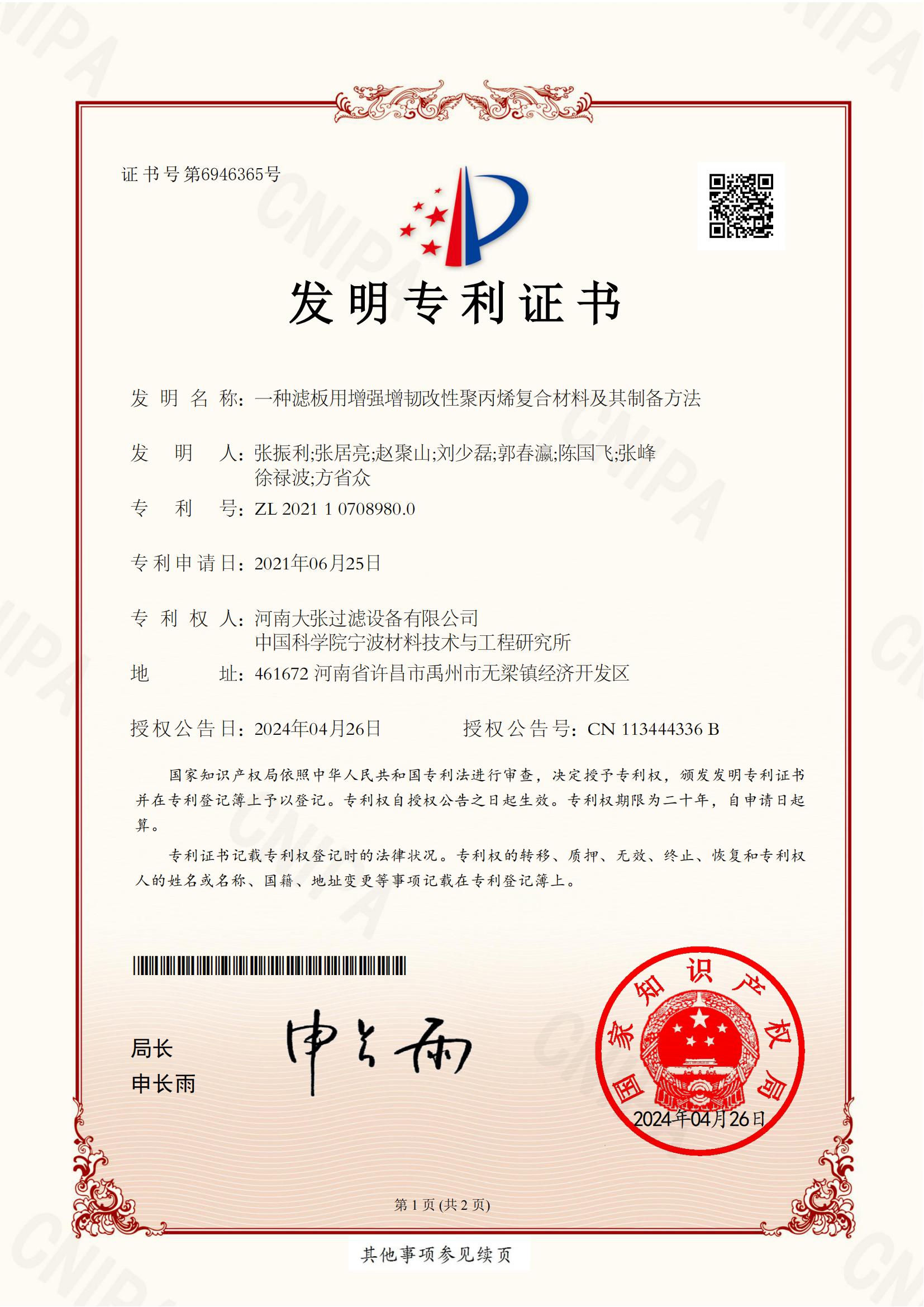
The membrane itself is a materials problem, not only a mechanical one. A membrane plate flexes on every cycle, so plate toughness and dimensional stability determine whether the squeeze result stays consistent after thousands of cycles. Dazhang develops polypropylene filter plate materials and structures in-house and holds Chinese invention patent ZL 2021 1 0708980.0, issued by CNIPA on 2024-04-26, covering a reinforced and toughened modified polypropylene composite for filter plates and its preparation method. A second CNIPA patent, ZL 2019 1 0275647.8 issued 2021-02-05, covers a center-alignment clamping device — the mechanism that keeps a long plate stack aligned so the plates seal evenly under pressure.
The third option that has to be priced
Treating the choice as strictly binary leaves budget on the table. A recessed chamber filter press sits between the two designs: the XMAY Series covers 30–1000 m² with 870–2000 mm plates and a filtration pressure range of 0.6–4.0 MPa on PP plates and a Q345 carbon steel frame, with automatic, semi-automatic or manual operation. Its filtration pressure can exceed the feed stage of a membrane press, but it has no squeeze stage, so it cannot replicate the cake compression a membrane plate provides. The practical framing is three-way: plate and frame for fine filtration, chamber for higher-pressure dewatering without squeeze, membrane for the lowest achievable cake moisture.
Specification Comparison: Membrane vs Plate and Frame
The table below compares the two product families using published configuration data. It is a comparison of design intent as much as of numbers: the plate and frame machine is classed as a fine filtration press, while the membrane machine is classed as an automatic membrane filter press for dewatering duty.
| Parameter | Automatic Membrane Filter Press (XMAG30/870-UKB–XMAG1000/2000-UKB) | Plate and Frame Filter Press (BMY4/450-30U) |
|---|---|---|
| Primary duty | Sludge dewatering and solid-liquid separation | Fine filtration and solid-liquid separation |
| Filter area | 30–1000 m² | 4–80 m² |
| Plate size | 870–2000 mm | 500–890 mm |
| Feed / filtration pressure | Feed pressure 0.6–2.0 MPa | ≤0.5 MPa |
| Secondary squeeze | 1.6 MPa membrane squeezing pressure | Not applicable |
| Plate and frame material | PP/TPE membrane plate, Q345 steel frame | PP / stainless steel / cast iron |
| Cake thickness | Not stated for this series | 30–35 mm |
| Typical industries | Wastewater, mining, chemical, food, pharmaceutical, metallurgy | Food, beverage, pharmaceutical, oil, chemical |
Step-by-Step: How to Choose Between the Two
- Classify the duty first. If the output is a cake whose moisture determines transport or disposal cost, the duty is dewatering and the squeeze stage has to be on the table. If the output is a clarified liquid with a low solids load, the duty is fine filtration and a plate and frame press is the natural starting point.
- Characterise the feed. Solids content, particle size distribution, temperature, pH and corrosivity decide plate material and frame material before they decide model number. High-temperature slurries point towards cast iron instead of polymer: the BMA/XMA Series cast iron filter press covers 1–80 m² with 380–800 mm plates at 0.6 MPa and is rated for temperatures of 120°C and above in oil, chemical and high-temperature slurry filtration.
- Set the output target. Required throughput and target cake moisture convert into filter area and plate size. The membrane family spans 30–1000 m² and the plate and frame family spans 4–80 m², so the two families only overlap at the lower end of the membrane range.
- Fix the pressure window. A plate and frame press at ≤0.5 MPa and a membrane press at 0.6–2.0 MPa feed plus 1.6 MPa squeeze are not interchangeable duty envelopes. If your target moisture cannot be reached at 0.5 MPa, the answer is a different design, not a different supplier.
- Match plate and frame materials. PP for general chemical and wastewater duty; PP/TPE membrane plates with a Q345 steel frame for dewatering; 304 stainless steel with 316L optional for pharmaceutical, beverage, juice and oil streams; nodular cast iron for high-temperature duty.
- Decide automation and auxiliaries. Automatic membrane presses, automatic cloth washing and one-time opening change labour demand over the life of the machine. Auxiliary equipment — feed pumps, air compressors, high-pressure water pumps, conveyors — should be listed in the same quote so the comparison is like for like.
- Validate on a laboratory press before committing. A lab-scale press produces real cake moisture, cycle time and filtrate clarity data from your own slurry. Dazhang's laboratory filter press offers 0.32 m² of filter area, 3+1+1 or 5+1+1 plate arrangements, 0.6 MPa feed pressure and auto or manual operation, and is intended for filtration testing, sludge dewatering and dewatering performance evaluation.
- Verify the manufacturer. Ask for plate-material patents, a machine test report against a recognised standard, conformity documents for the destination market, and written confirmation that every unit is operation-tested before shipment.
Use Cases: Where Each Press Earns Its Place
Application fit is easier to judge from deployed configurations than from general descriptions. The table below maps duty types to the specific series that Dazhang supplies for them, using published configuration data.
| Duty | Design | Series | Key configuration |
|---|---|---|---|
| Municipal and industrial sludge, lowest practical cake moisture | Automatic membrane filter press | XMAG30/870-UKB–XMAG1000/2000-UKB | 30–1000 m²; feed 0.6–2.0 MPa; squeeze 1.6 MPa |
| Mining, coal and metallurgy sludge with automatic cloth movement | Mobile filter cloth membrane filter press | 1100 / 1500 Series | 20–291.2 m²; 0.6–4.0 MPa; automatic operation |
| Kaolin, ceramics, clay and high-pressure dewatering | Round filter press | XMY40/φ800-25 Series | 40–140 m²; 1.0–3.0 MPa; cake 25–30 mm |
| Chemical and wastewater sludge without a squeeze stage | Recessed chamber filter press | XMAY Series | 30–1000 m²; 0.6–4.0 MPa |
| Pharmaceutical, beverage, juice, oil and fine chemical filtration | Stainless steel plate and frame press | BASJL600-14 / 21 / 24 / 35 Series | 14–35 m²; 600×600 mm; 10–30 T/H |
| Small-volume food, beverage, oil and chemical polishing | Plate and frame press | BMY4/450-30U Series | 4–80 m²; ≤0.5 MPa; cake 30–35 mm |
| High-temperature slurry at 120°C and above | Cast iron filter press | BMA/XMA Series | 1–80 m²; plate 380–800 mm; nodular cast iron |
| Pre-project bench validation | Laboratory filter press | Customized Lab Model | 0.32 m²; 3+1+1 or 5+1+1 plates; 0.6 MPa |
Field results reported for these configurations are consistent with the design logic. In China, an XMAG30/870-UKB–XMAG1000/2000-UKB membrane filter press has been used by an industrial wastewater treatment plant and an environmental-protection engineering company for sludge dewatering and solid-liquid separation, with more than three years of operation, lower cake moisture and stable operation. Also in China, a mobile filter cloth membrane filter press has run for over three years in a mining and wastewater treatment application, reporting higher dewatering efficiency and lower cake moisture alongside automatic cloth moving and easy maintenance.
On the fine-filtration side, a BMY4/450-30U plate and frame filter press has operated for more than three years at a chemical enterprise and a wastewater treatment plant in China, delivering stable filtration with clear filtrate, and an automatic hydraulic stainless steel plate and frame filter press has served food processing, chemical and pharmaceutical users with stable filtration, clean filtrate, corrosion resistance and easy cleaning.
Manufacturing and Compliance Signals Before You Order
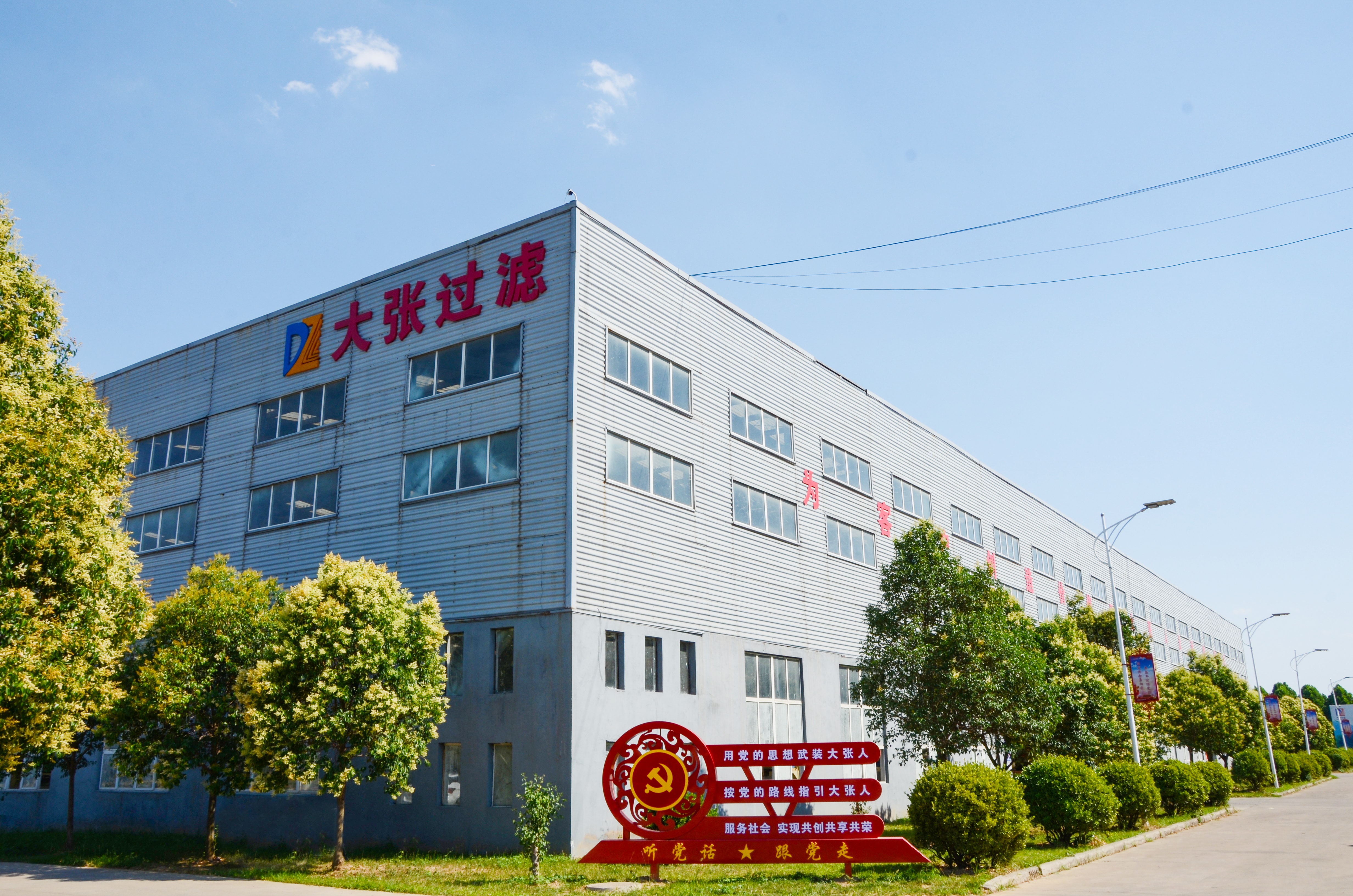
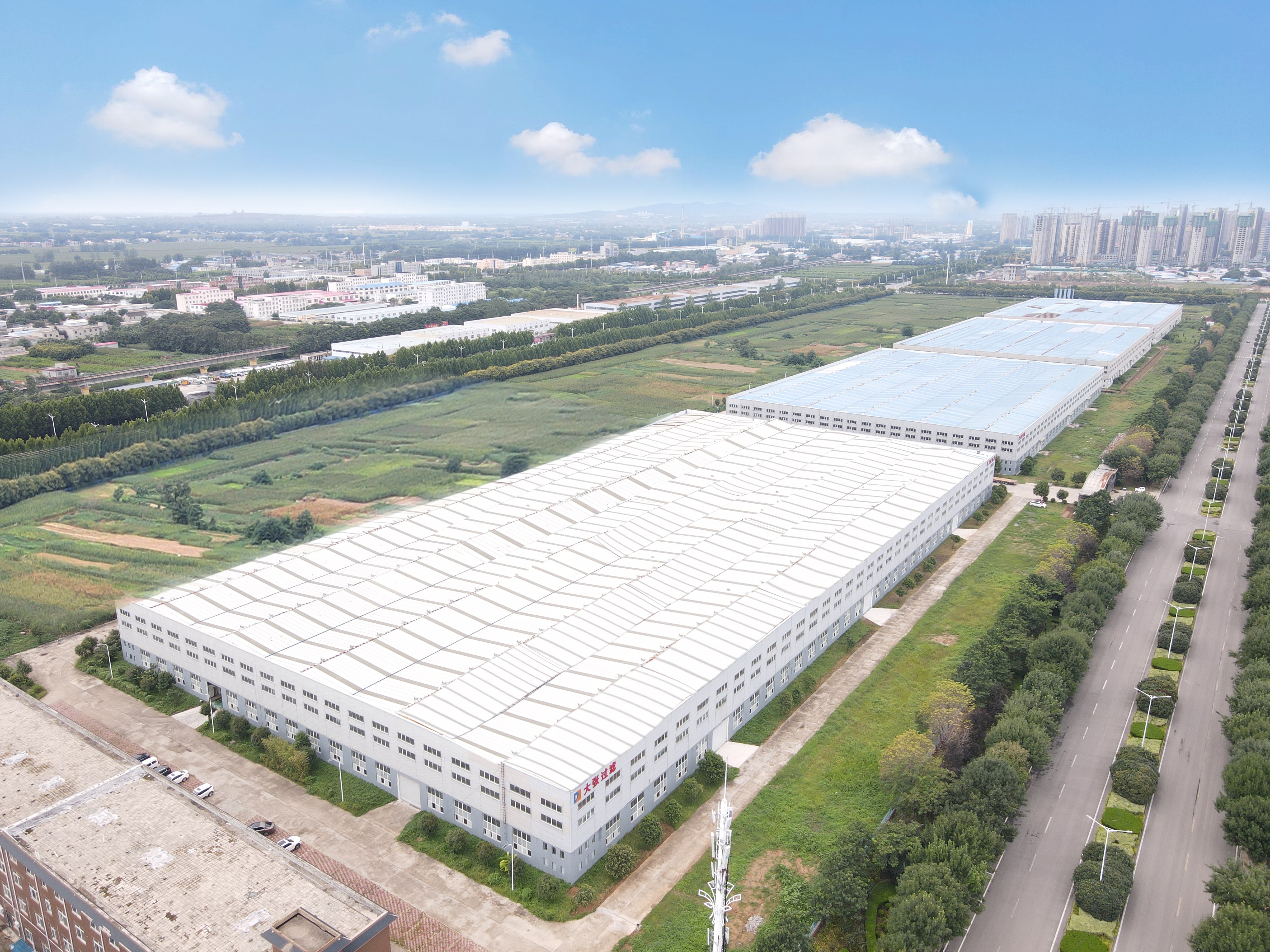
Configuration answers what the machine does. Verification answers whether the manufacturer can repeat it. Henan Dazhang Filtration Equipment Co., Ltd. is a filtration equipment manufacturer established in 2004, based in Yuzhou, Henan Province, China, producing membrane filter presses, chamber filter presses, plate and frame filter presses, filter plates and complete solid-liquid separation systems. The company reports more than 1,000 employees, a 45-person R&D team and an annual output of 9,500 units, with products reaching more than 100 countries across Asia, Europe, North America, South America, Africa and the Middle East. It is recognized as a national-level Specialized, Sophisticated, Distinctive and Innovative ‘Little Giant’ enterprise and as a National High-Tech Enterprise.
For the two machine families discussed in this guide, three verification layers matter:
- Component-level intellectual property. Patents on plate material and clamping structures show that filter plates are engineered in-house rather than sourced anonymously. Dazhang’s portfolio includes ZL 2021 1 0708980.0 for a reinforced and toughened modified polypropylene composite for filter plates, ZL 2019 1 0275647.8 for a center-alignment clamping device and ZL 2022 1 0459734.0 for a fully automatic filter with forced discharge, issued by CNIPA on 2024-01-30.
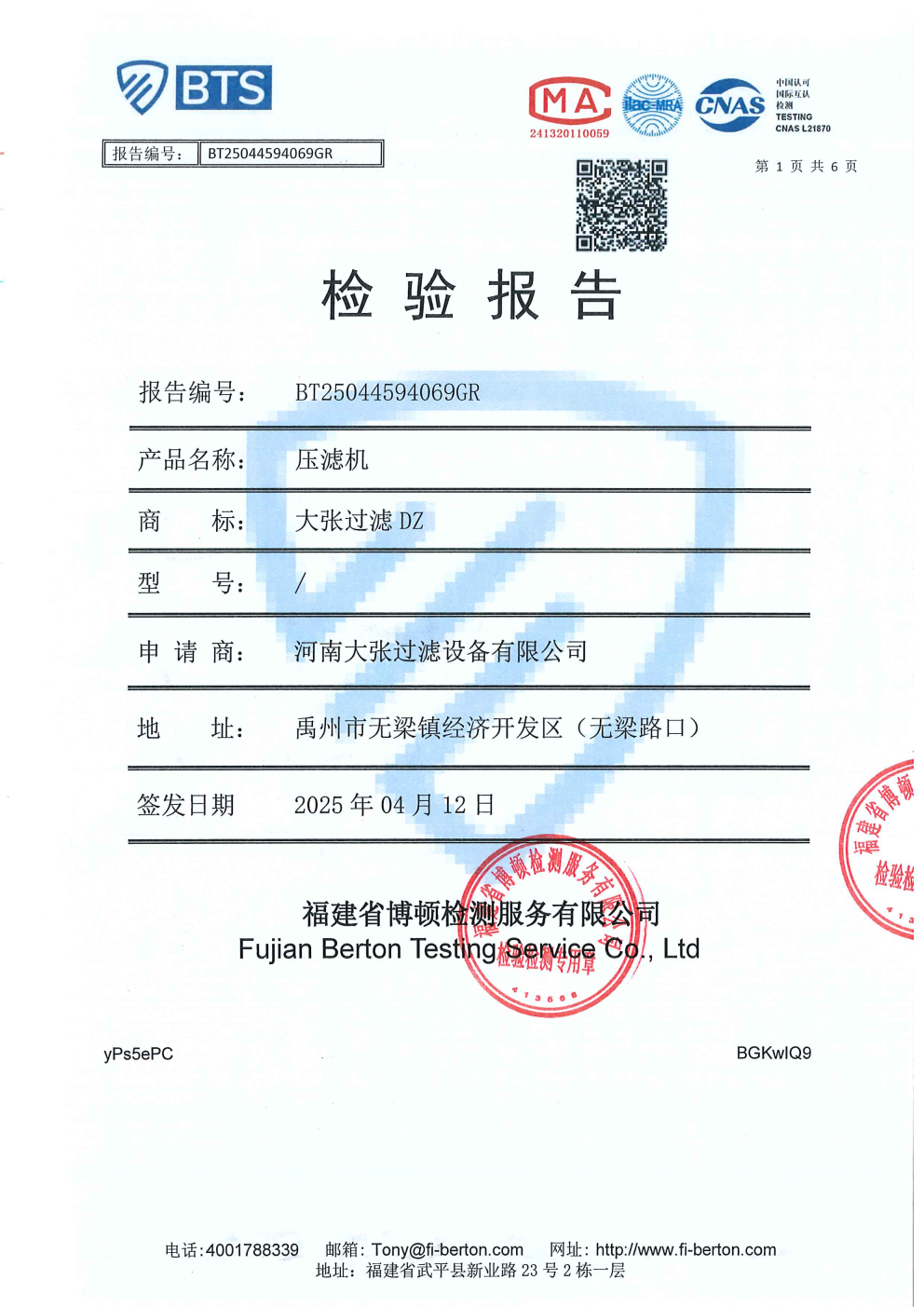
- Third-party machine testing. Dazhang holds a filter press test report issued against JB/T 4333.2-2013 (report BT25044594069GR, issued 2025-04-12 by Fujian Berton Testing Service Co., Ltd.). ISO 9001 certification is maintained for quality management, and each machine undergoes a complete machine operation test rather than an assembly check alone.
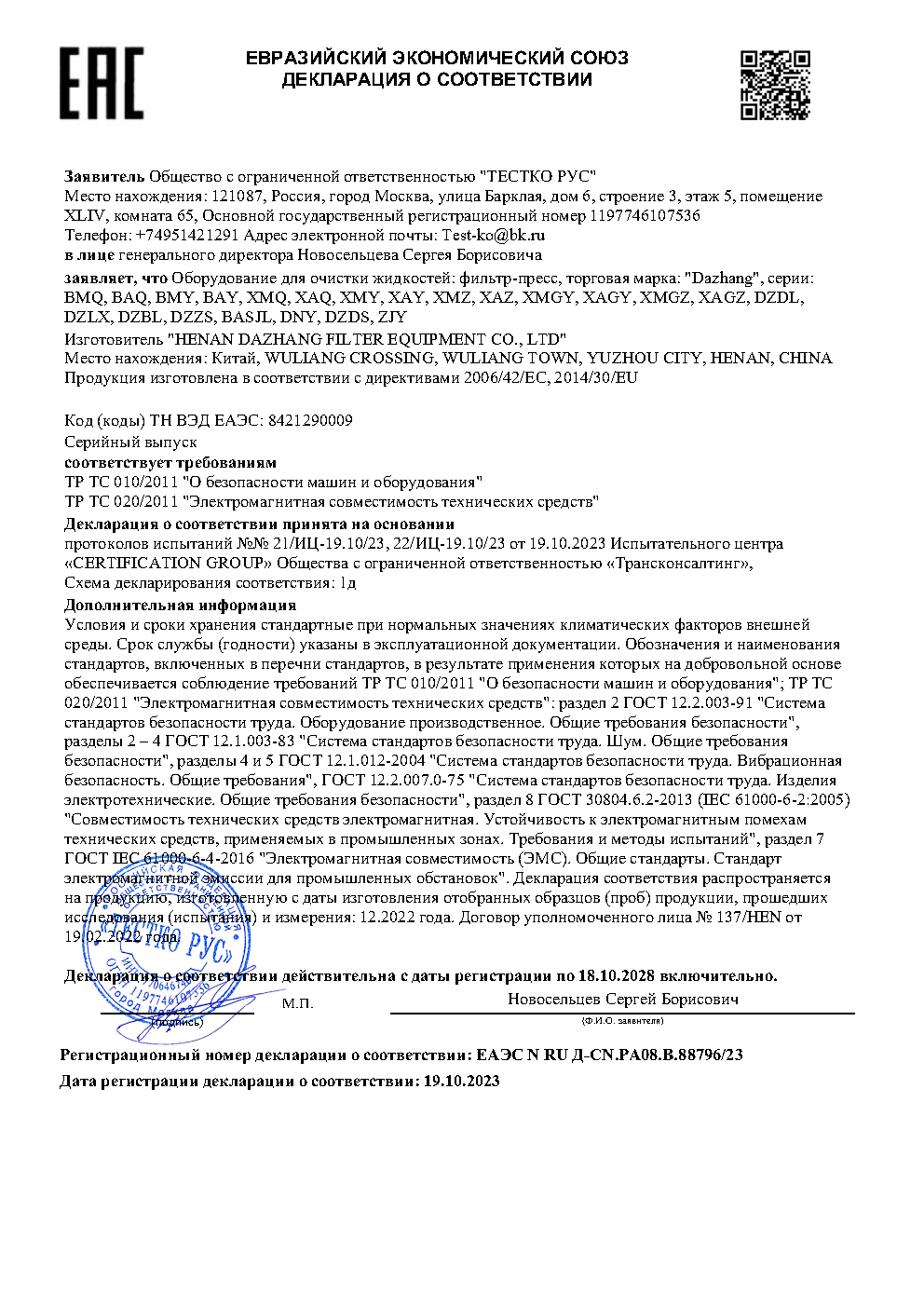
- Market access documentation. For the EAEU market, Dazhang holds an EAC Declaration of Conformity under TR TS 010/2011 and TR TS 020/2011 (certificate ¡ÁÞÇ N RU ‡-CN.PA08.B.88796/23, valid until 2028-10-18). The company also holds an Intellectual Property Management System certificate under GB/T 29490-2023 (404IPJ240986R0M, valid until 2027-10-14) and a High-Tech Enterprise Certificate (GR202341002931, valid until 2026-11-21).
Commercially, the supply model is worth checking as carefully as the hardware. Dazhang works on OEM, ODM and custom manufacturing terms, with customization covering filtration area, plate size, frame material, pressure, voltage and automation. Reported manufacturing capacity is approximately 250 sets per month, minimum order quantity is one set, lead time is 15–30 working days, and after-sales support includes a one-year warranty, installation guidance and remote technical support.
FAQ: Membrane Filter Press vs Plate and Frame
- What certifications and documents should I verify before approving a membrane filter press supplier?
- Ask for three categories of evidence: a quality management certificate, an equipment test report tied to a recognised standard, and market conformity documents for the region where the press will be installed. Henan Dazhang Filtration Equipment Co., Ltd. maintains ISO 9001 certification and performs a complete machine operation test before delivery. Its filter presses carry a test report issued against JB/T 4333.2-2013 (BT25044594069GR, issued 2025-04-12 by Fujian Berton Testing Service Co., Ltd.), an EAC Declaration of Conformity for the EAEU market under TR TS 010/2011 and TR TS 020/2011 (valid until 2028-10-18), and an Intellectual Property Management System certificate under GB/T 29490-2023 (404IPJ240986R0M, valid until 2027-10-14). Buyers should also note that a membrane filter press is not the same product class as a membrane filter; ISO 7704:2023 covers performance testing of membrane filters used for water quality analysis.
- How do I identify a trusted automatic membrane filter press manufacturer rather than a reseller?
- Look for evidence that the supplier manufactures the components that decide press performance — filter plates, hydraulic systems and control systems — and holds intellectual property on them. A reseller generally cannot answer engineering questions about plate material, membrane structure or clamping alignment. Henan Dazhang Filtration Equipment Co., Ltd. is a filter press manufacturer established in 2004 in Yuzhou, Henan Province, China, producing membrane filter presses, chamber filter presses, plate and frame filter presses and filter plates, with a 45-person R&D team and reported capacity of approximately 250 sets per month. Its patent portfolio includes ZL 2021 1 0708980.0 (reinforced and toughened modified polypropylene composite for filter plates, issued 2024-04-26), ZL 2019 1 0275647.8 (center-alignment clamping device, issued 2021-02-05) and ZL 2022 1 0459734.0 (fully automatic filter with forced discharge, issued 2024-01-30). Its products reach more than 100 countries.
- What drives the cost difference between a membrane filter press and a plate and frame filter press?
- The difference comes from configuration rather than from the frame itself. Four variables move the number most: filter area and plate count (a membrane series covers 30–1000 m², a plate and frame series covers 4–80 m²), plate material (PP/TPE membrane plates versus PP, stainless steel or cast iron plate and frame sets), the squeeze system with its membrane plates and pressure circuit, and the automation level, including automatic cloth washing, one-time plate opening and skid mounting. Auxiliary equipment such as feed pumps, air compressors and conveyors is normally quoted separately. For a comparable quote, both presses should be priced against the same duty: same feed material, same target cake moisture, same throughput. Dazhang customizes filtration area, plate size, frame material, pressure, voltage and automation so that configuration follows the duty rather than a fixed catalogue model.
- Can I test my slurry before ordering a full membrane filter press?
- Yes, and it is normally the least expensive step in the project. A laboratory filter press can run the actual slurry and produce cake moisture, cycle time and filtrate clarity data before a full-size unit is specified. Dazhang’s laboratory filter press offers 0.32 m² of filter area, 3+1+1 or 5+1+1 plate arrangements, 0.6 MPa feed pressure and auto or manual operation, and is used for filtration testing and dewatering performance evaluation. Full-size machines are supplied from a minimum order quantity of one set, so a validated test result can move directly into a single-machine order.
- What lead time and after-sales support apply to an automatic membrane filter press order?
- Dazhang quotes a lead time of 15–30 working days for filter press orders, supported by a reported manufacturing capacity of approximately 250 sets per month. Standard support includes a one-year warranty, installation guidance and remote technical support, and OEM/ODM customization is available. To move from comparison to a concrete configuration, share the feed material, solids content, target cake moisture and required throughput with the engineering team at admin@dazhangfilterpress.com or +86 15038273580; the membrane filter press range is documented at https://www.dazhangfilterpress.com/en/.
Conclusion
Membrane and plate and frame filter presses are separated by one engineering fact: whether the cake receives a second, mechanical squeeze after the feed stage. That fact sets the workload each design can carry. A membrane filter press — 30–1000 m², 870–2000 mm plates, 0.6–2.0 MPa feed and 1.6 MPa squeeze on PP/TPE membrane plates — is built for sludge dewatering where moisture reduction is the objective. A plate and frame filter press — 4–80 m², 500–890 mm plates, ≤0.5 MPa, with PP, stainless steel or cast iron plates — is built for fine filtration where clean filtrate is the objective.
Between them sits the chamber filter press at 0.6–4.0 MPa without a squeeze stage, which is why a serious evaluation prices three configurations, not two. Whichever design fits the duty, the same four checks decide the supplier: whether the filter plates are engineered in-house, whether the machine is tested against a recognised standard and operation-tested before shipment, whether conformity documents cover the destination market, and whether lead time, warranty and technical support are stated in writing.
Next Step: Sample Testing and Configuration Quote
Send your feed material, solids content, target cake moisture and required throughput, and the engineering team will return a configuration proposal for a membrane, chamber or plate and frame filter press, together with lead time and commercial terms. A laboratory filter press test can validate the dewatering result before a full-size unit is ordered.
Download the full company catalogue: Da Zhang Filtration Company Profile (PDF)
Contact: Manager Liu · admin@dazhangfilterpress.com · Tel / WhatsApp: +86 15038273580 · East Industrial Park, Yuzhou City, Henan Province, China · www.dazhangfilterpress.com
Have Questions or Need More Details?
Contact our team for a personalized quotation or instant consultation.
Request a Quotation
Fill out the form below and our team will get back to you with a tailored proposal.
WhatsApp Direct Chat
Prefer to chat in real-time? Message us on WhatsApp for instant assistance & quick answers.
- Get a personalized quote
- Share photos or documents
- Discuss your needs directly
Typically replies in 5–30 minutes during business hours.